Agriculture in the Middle East is more critical and complex in 2025 than ever before. The sector faces an ongoing struggle with water scarcity, climate challenges, and arid landscapes, yet it continues to evolve, embracing innovative farming technologies and best practices. The drive toward food security, sustainability, and economic resilience is fundamentally reshaping farming in the region.
This article explores the challenges of agriculture in the Middle East, highlights the transformative innovations taking root, and evaluates the policy directions, environmental responses, and digital technologies shaping its agricultural future.
Key Themes in Middle East Farming 2025
The evolving agricultural landscape of the region
The impact of climate change and environmental stress
Adoption of advanced technologies and modern farming systems
The crucial roles of policy, regional cooperation, and digital platforms
2025: A Pivotal Year for Middle East Agriculture
2025 marks a turning point as digital transformation and breakthrough technologies redefine how the region farms, manages risk, and secures its food supply.
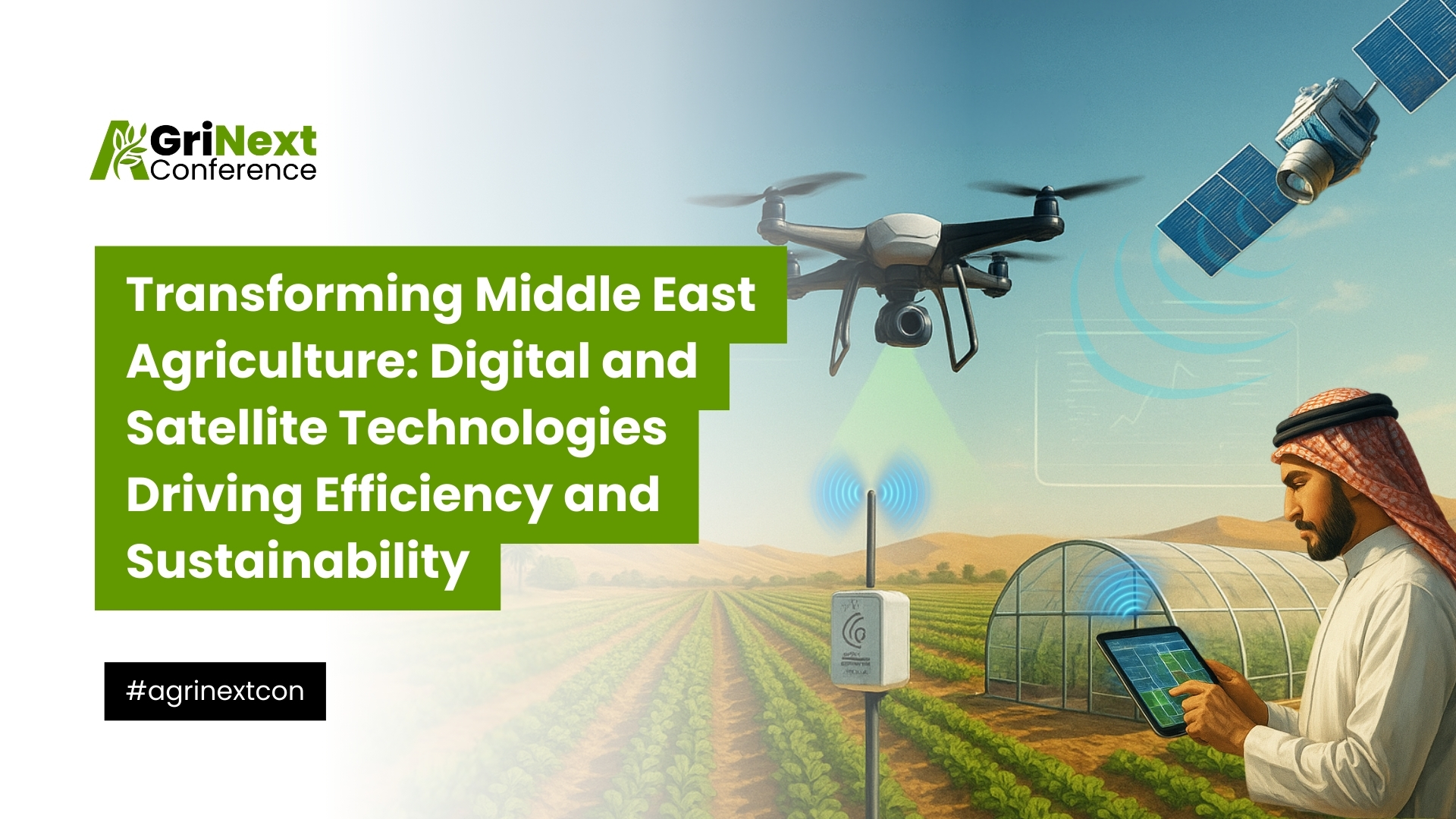
Digital agriculture is now a mainstay, with satellite-based platforms, AI, and machine learning enabling real-time monitoring, predictive analytics, and tailored advisories.
Drones are widely adopted for crop scouting, NDVI-based vegetation health mapping, and AI-driven pest management—helping farmers cut losses and boost yields.
Blockchain traceability systems give regional producers the ability to guarantee food authenticity, reduce fraud, and enhance export competitiveness.
Controlled-environment agriculture (CEA)—including vertical farming and hydroponics—is rapidly scaling, especially in Gulf states, ensuring year-round production with immense water savings.
Fleet and resource management platforms leverage satellite and AI insights to track equipment, optimize logistics, and reduce operational costs.
Saudi Arabia’s Digital Farming with SatSure
One of the most promising examples comes from Saudi Arabia’s partnership with SatSure, a geospatial intelligence company using satellites to deliver farm-level insights. Through this initiative, farmers in water-scarce regions gain access to:
Satellite-based soil moisture mapping for optimized irrigation scheduling.
Vegetation health monitoring to detect crop stress early.
Predictive analytics to guide planting and harvesting decisions.
This project is part of Saudi Arabia’s Vision 2030 food security plan, showing how digital and satellite-driven agriculture can improve productivity while conserving precious water resources. By scaling such solutions, small and medium-sized farmers across the Middle East can access the same intelligence once reserved for large agribusinesses.
Dubai :Digital Agri-Tech Powering Hybrid and Vertical Farming Innovation
Dubai has emerged as a global hub for digital agriculture, where advanced technologies power large-scale hybrid vertical farming projects. Pure Harvest Smart Farms, in collaboration with Trane Technologies, uses AI-driven climate control, IoT sensors, and satellite-linked monitoring systems to optimize growing conditions in real time.
These digital tools ensure precise irrigation, nutrient delivery, and energy management, allowing fresh vegetables and herbs to be produced year-round in the desert. Alongside hybrid farming, Dubai is rapidly advancing large-scale vertical farming projects, such as the GigaFarm and Bustanica, which utilize AI, IoT, and climate control to sustainably produce fresh food year-round in the desert. By combining hybrid vertical farming with cutting-edge digital platforms, Dubai is reducing food import dependence, conserving water, and showcasing a sustainable model for agriculture in arid regions.
Outlook
Access to real-time agricultural intelligence is becoming more affordable and scalable, democratizing advanced technologies for farmers across the region. Satellite-driven insights, AI-powered platforms, and digital farming tools are not only improving yields but also helping conserve scarce resources like water and energy.
Regional cooperation and supportive policies are further amplifying these gains, ensuring that small and medium-sized farmers can benefit alongside large agribusinesses. From Saudi Arabia’s satellite-powered water management to the UAE’s vertical farms producing fresh vegetables in the desert, the Middle East is building an agricultural model where efficiency, resilience, and sustainability go hand in hand.
As these innovations converge, 2025 positions the region not just to overcome its agricultural challenges, but to set a global benchmark for farming in arid and climate-stressed environments.
AgriNext 2025: Connecting Innovation and Sustainability in the Middle East
AgriNext 2025, taking place in Dubai, will be the region’s premier platform for showcasing how technology will transform agriculture. The event will bring together global innovators, startups, policymakers, and agribusiness leaders to highlight AI and machine learning tools that will enable smarter crop management, hydroponics and vertical farming systems that will support sustainable food production, satellite and IoT solutions that will deliver real-time insights on water, soil, and climate, and blockchain-powered systems that will ensure supply chain transparency. By connecting technology pioneers with regional farmers and decision-makers, AgriNext 2025 will accelerate the adoption of digital solutions and inspire a more resilient, efficient, and sustainable agricultural future in the Middle East.
Signup For AgriNext Conference Newsletter




 Reach us on WhatsApp