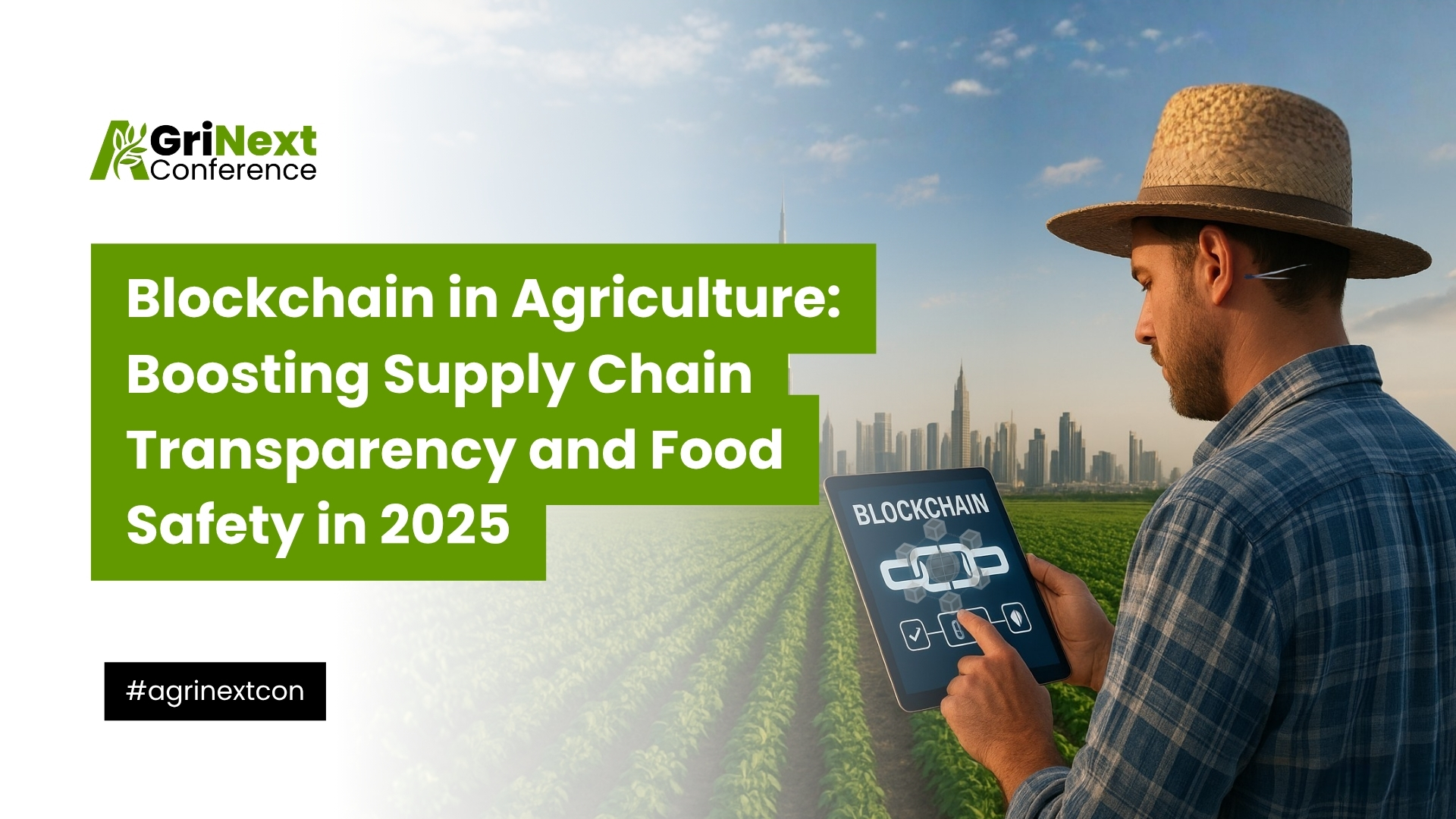
Blockchain technology is revolutionizing the agricultural sector by strengthening supply chain transparency and food safety. In 2025, it enables end-to-end traceability—from farm to fork—where every process, including planting, harvesting, processing, and shipping, is securely recorded on a decentralized ledger. This ledger is accessible to all stakeholders, ensuring data integrity and accountability throughout the value chain.
Enhancing Transparency and Trust
Agricultural supply chains are often complex and fragmented, making it difficult to verify product origin, quality, and authenticity. Blockchain solves this by creating a single, tamper-proof source of truth, where every transaction is validated and timestamped. Farmers, processors, distributors, and retailers can all view the same verified data, eliminating discrepancies and fraud.
This digital transparency builds consumer confidence by verifying safety and sustainability claims. When a contamination incident occurs, blockchain records enable rapid identification and isolation of affected batches—reducing public health risks and preventing widespread recalls. It also reduces inefficiencies, food wastage, and mislabeling, which are major pain points in global food supply chains.
Smart Traceability through Digital Integration
Blockchain’s strength lies in its integration with other digital technologies. When linked with IoT sensors, GPS systems, and QR codes, it bridges the gap between physical and digital supply chains. For instance, consumers can simply scan a QR code on an organic product to trace its complete journey—from the farm where it was grown to the store where it is sold.
Producers can digitally prove compliance with sustainability standards, exporters can validate origin certificates, and regulators can access immutable records to ensure swift enforcement of food safety policies. This reduces manual paperwork, improves efficiency, and ensures accountability at every level.
Dubai: Leading Blockchain Adoption in Agri-Food Systems
In the Middle East, Dubai is emerging as a leader in blockchain adoption for agriculture. Its food sector is rapidly digitizing to build a smart, sustainable food ecosystem that enhances traceability, food safety, and waste reduction.
By using blockchain, Dubai’s agribusinesses minimize logistics inefficiencies and mislabeling, while ensuring real-time monitoring of perishable goods. These innovations enhance shelf life, enable better forecasting, and deliver annual savings worth millions through optimized storage and reduced losses. The initiative aligns with Dubai’s sustainability vision and its ambition to become a global innovation hub for food security and agri-tech.
A practical example is the Agriota E-Marketplace,which connects Indian farmers directly with UAE food companies via blockchain. This platform ensures transparent sourcing, fair pricing, and trusted trade facilitation. It empowers farmers with secure market access while helping the UAE ensure reliable and safe food imports.
Global and Regional Market Outlook
In 2025, the global blockchain in agriculture and food supply chain market is valued at around USD 0.6 billion and is projected to reach USD 12.1 billion by 2035, growing at a robust 36% compound annual growth rate (CAGR).
The Middle East, led by the UAE and neighboring GCC countries, is increasingly capturing a share of this growth, with accelerated adoption driven by strategic government investments, food import strategies, and smart farming initiatives. As Dubai positions itself as a regional hub for agri-blockchain innovation, the Middle East’s blockchain agricultural market is set for exponential expansion, reflecting substantial regional investments and a strong commitment to future-proof food systems through technology.
Future Outlook: Building a Digital Backbone for Agriculture
The next phase of blockchain in agriculture will involve deeper integration across agri-tech ecosystems. Governments and private players are expected to expand digital infrastructure, enabling smallholder inclusion and the delivery of financial services like crop loans and insurance linked to blockchain records.
When combined with IoT and AI platforms, blockchain can create a digital backbone for sustainable resource management, climate-resilient farming, and data-driven policy decisions. Governments will be able to enforce sustainability incentives more effectively, backed by verifiable, real-time data.
AgriNext 2025: Spotlight on Blockchain Innovation
The upcoming AgriNext Conference 2025 scheduled for November 5–6 in Dubai, will spotlight such transformative innovations. With over 1,000 participants from across the global agri-tech ecosystem, the event will explore blockchain’s pivotal role in enhancing transparency, efficiency, and sustainability across agricultural value chains.
By showcasing practical blockchain applications and fostering collaboration between startups, policymakers, and investors, AgriNext 2025 reinforces Dubai’s status as a nexus for agricultural innovation and smart food systems in the Middle East.
References
MDPI:A Systematic Literature Review and Bibliometric Analysis of Blockchain Technology for Food Security
Future Market Insight:Blockchain in Agriculture and Food Supply Chain Market
Signup For AgriNext Conference Newsletter




 Reach us on WhatsApp