
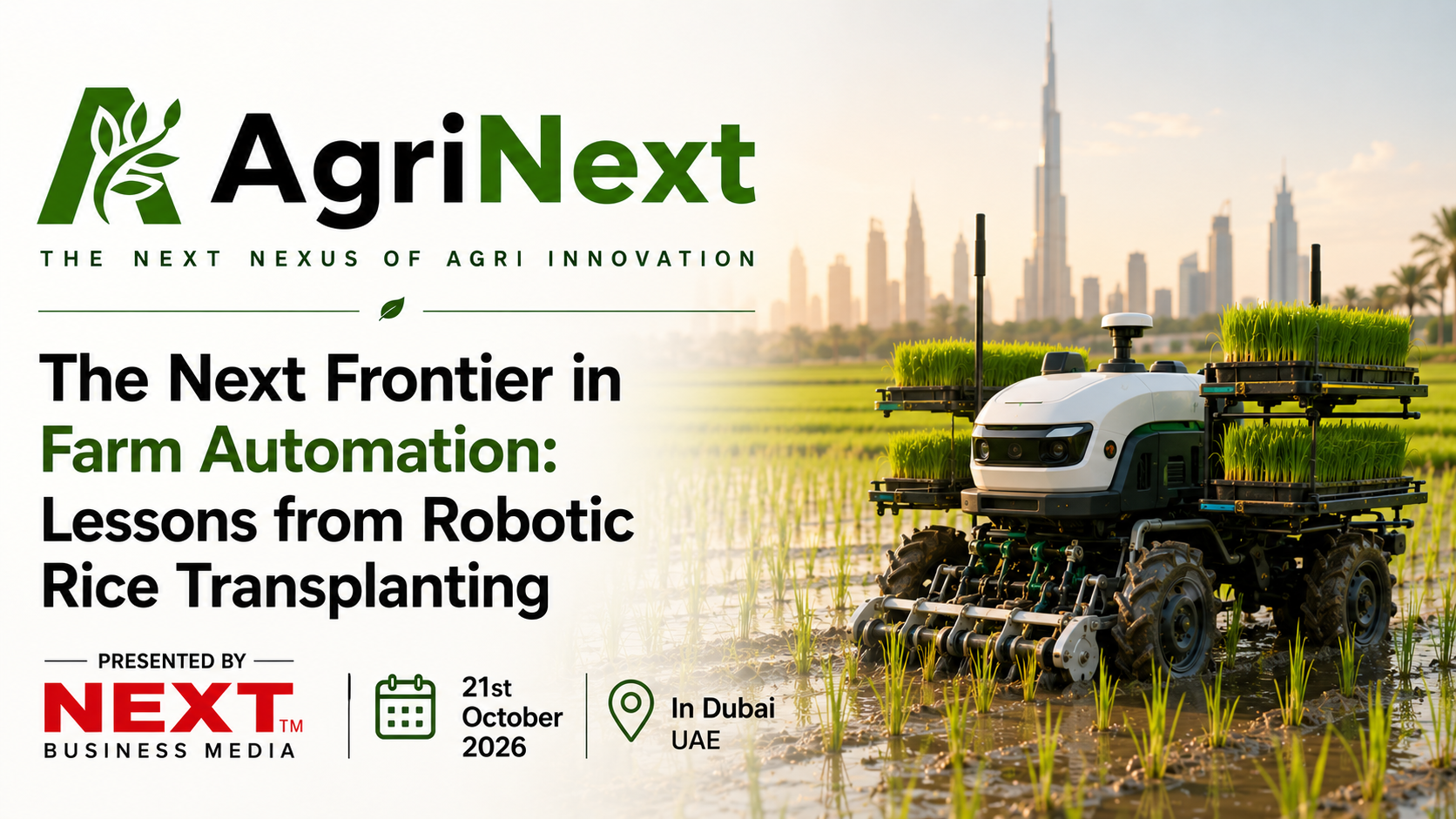
For generations, rice planting has been synonymous with workers manually transplanting seedlings across flooded paddies. That image is rapidly changing. In parts of China, autonomous rice transplanters are now operating at commercial scale, navigating muddy fields with RTK-GPS, cameras, and advanced sensing systems to plant seedlings with remarkable precision. More than a breakthrough for rice production, these deployments demonstrate how autonomy is moving into some of agriculture’s most labor-intensive and time-sensitive operations.
China Case Study: From Pilot to Paddy-Scale Deployment
Driven by labor shortages, rising wages, and strong government support for agricultural mechanization, China has accelerated the deployment of autonomous rice-transplanting systems. These machines combine RTK-GPS navigation, computer vision or LiDAR, and precision seedling-handling mechanisms to operate with minimal human intervention.
Field deployments have shown that a single operator can supervise multiple autonomous transplanters working across large paddy fields. Benefits reported include consistent row spacing, accurate planting depth, improved stand uniformity, reduced peak labor demand, and better use of narrow seasonal planting windows. Challenges remain, including high capital costs, the need for reliable maintenance networks, and the requirement for well-leveled fields to maximize performance.
Lessons Beyond Rice
Although designed for paddy fields, the underlying technologies have applications far beyond rice cultivation.
Engineering for Difficult Terrain: Rice robots operate continuously in deep, low-traction mud without damaging soil structure. Their lightweight chassis and specialized traction systems offer valuable design insights for autonomous equipment operating in wet or soft-soil conditions.
Precision Plant-by-Plant Operations: Computer vision and AI systems that identify rows and precisely place individual seedlings can be adapted for vegetable, fruit, and specialty crop production, including lettuce transplanters and berry harvesting systems.
Data-Driven Farming: Autonomous transplanters continuously collect operational data such as planting density, skipped plants, and field coverage. Integrated with farm-management platforms, these datasets can improve input optimization, yield forecasting, and operational planning.
Key Operational Insights
China’s experience demonstrates that successful agricultural autonomy extends well beyond self-driving capability.
•Effective systems combine perception technologies, precise navigation, and accurate planting mechanisms.
•Field design matters; consolidated, well-prepared fields significantly improve efficiency.
•Service models—including Robotics-as-a-Service, cooperative ownership, and manufacturer-supported maintenance—are essential for broader adoption, particularly among small and medium-sized farms.
Implications for AgTech
The broader lesson is clear: physically demanding, highly seasonal, and time-critical farm operations are the strongest candidates for automation. This principle applies not only to rice transplanting but also to precision input placement, mechanical weeding, transplanting across specialty crops, and harvesting assistance.
Autonomous planting also supports sustainability goals. Greater planting precision can reduce seed waste, improve crop establishment, and lower the need for replanting, helping optimize resource use. While the full environmental impacts require further research, combining robotics with sound agronomic practices offers a pathway toward more resource-efficient production.
The Road Ahead
China’s commercial deployment of autonomous rice transplanters offers a practical preview of the future of farm automation. The greatest opportunity is not to replicate these machines directly, but to adapt their technologies and operational models to local crops, labor challenges, and production systems.
The next major advance in agriculture is unlikely to come solely from larger autonomous tractors. It will come from applying proven global innovations to labor-intensive specialty crops and precision farming systems. Cross-border technology transfer, collaboration, and continued investment in agricultural robotics will be critical to building the next generation of resilient, productive, and sustainable food systems.
Join the conversation at AgriNext Awards & Conference. Meet industry leaders, AgTech innovators, and investors exploring robotics, AI, precision agriculture, and sustainable farming solutions that are redefining the future of global agriculture.
Dubai Edition: agrinextcon.com
US Edition: us.agrinextcon.com
Reference
People’s Daily Online. BeiDou navigation system powers China’s agricultural transformation.
Signup For AgriNext Conference Newsletter


 Reach us on WhatsApp