
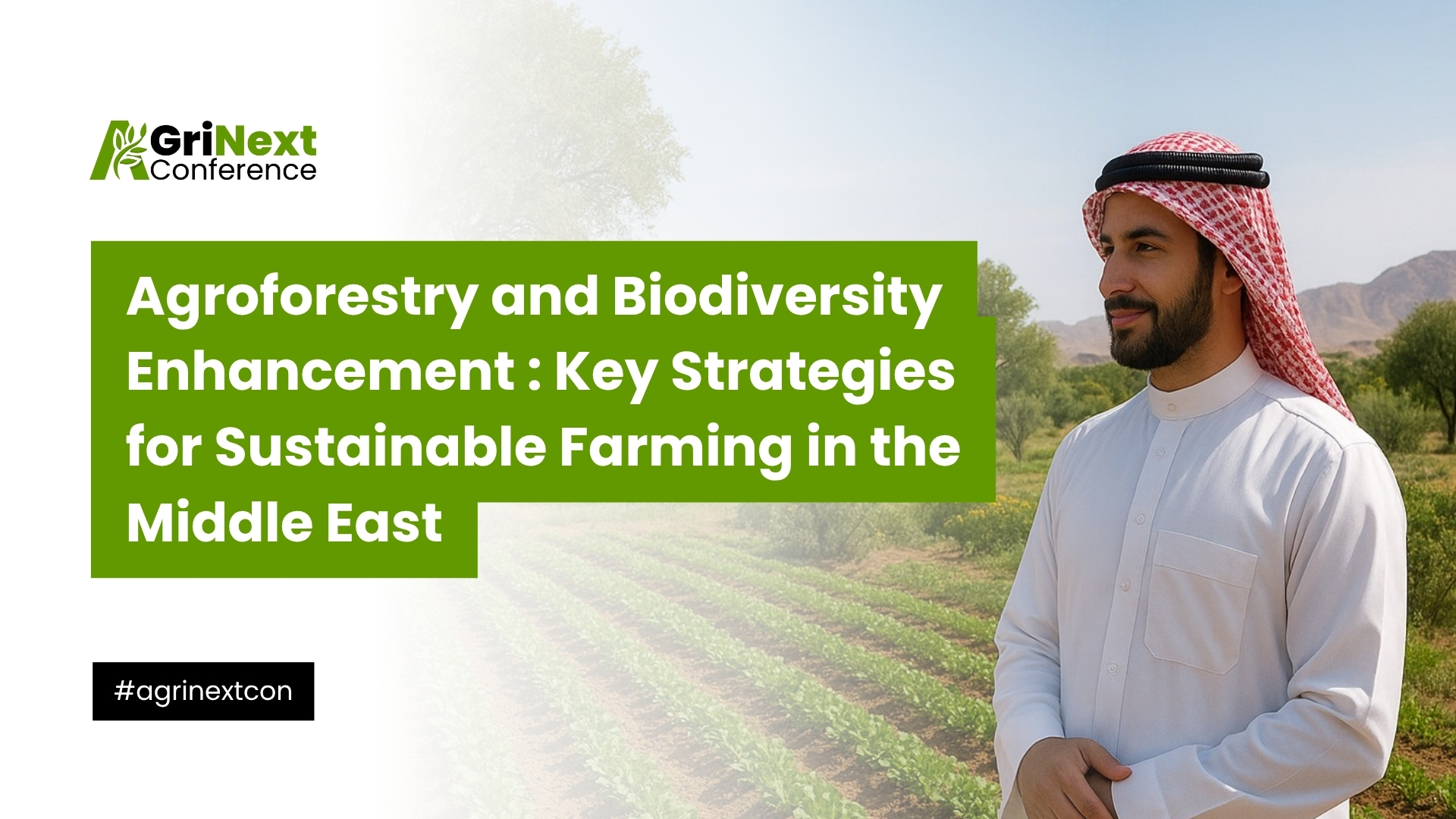
In the Middle East, sustainable farming faces unique challenges such as water scarcity, harsh climates, and land degradation. Agroforestry—a farming approach that integrates trees and shrubs with crops and animals—is emerging as a powerful strategy to enhance biodiversity and promote sustainable agriculture in this region.
By creating diverse habitats that support wildlife, enriching soil health, and improving farm resilience to extreme weather, agroforestry plays a crucial role in strengthening agricultural sustainability across the arid Middle Eastern landscape.
Agroforestry: Blending Trees, Crops, and Sustainability
Agroforestry is the intentional integration of trees and shrubs into farming systems alongside traditional crops and livestock. Practices such as alley cropping, silvopasture, forest farming, and windbreaks create multifunctional landscapes that boost productivity while restoring ecological balance.
It is also recognized as one of the key strategies to achieve the United Nations Sustainable Development Goals (SDGs), supporting sustainable food production, climate action, and ecosystem restoration.
Benefits of Integrating Trees and Shrubs
Soil Health and Fertility
Trees help maintain healthy soils by preventing erosion, improving structure, and enhancing nutrient cycling. Nitrogen-fixing species enrich the soil naturally, reducing dependence on synthetic fertilizers.
For instance, in Kenya, adding trees to maize fields increased both crop yields and soil organic matter—demonstrating agroforestry’s long-term benefits for soil and productivity.
Biodiversity Enhancement
Agroforestry supports diverse plant and animal life, creating ecosystems that are more resilient to pests and diseases.
Research from Brazil’s Atlantic Forest found that agroforestry systems deliver 45%–65% higher biodiversity benefits compared to conventional monocultures.
Climate Change Mitigation
Trees absorb carbon dioxide and reduce greenhouse gas emissions, helping combat climate change. According to the Food and Agriculture Organization (FAO, 2022), agroforestry could sequester up to 1.1 gigatons of CO₂ annually, contributing to global sustainability goals.
Water Management
Tree roots improve groundwater recharge, while their canopies reduce evaporation. In dry regions, this natural water management enhances soil moisture and crop resilience during droughts.
Inspiring Initiative: Regreening Africa
The Regreening Africa Project by ICRAF, funded by the European Union, showcases agroforestry’s power to restore degraded lands across Sub-Saharan Africa. By integrating local tree species with farmlands, the project strengthens soil fertility, biodiversity, and carbon storage. It also supports rural livelihoods—helping reduce forced migration and income loss while promoting a greener, more sustainable future.
Agroforestry in the Middle East
Olive Agroforestry Systems in Morocco, Tunisia, and Algeria
Olive trees—traditional and economically vital crops in the Mediterranean—are widely used in agroforestry systems across Morocco, Tunisia, and Algeria. These systems combine olive trees with carob trees and other shrubs, enhancing biodiversity, improving soil health, and increasing resilience to drought while maintaining stable farm income.
Argan Tree Agroforestry in Morocco
In Morocco, argan forests span about 800,000 hectares in arid and semi-arid zones. These silvopastoral systems not only produce valuable argan oil but also sustain biodiversity and provide wood and forage resources for local communities.
Traditional management of these systems supports the livelihoods of around two million rural people while preserving ecosystem health.
Agroforestry and Afforestation in Jordan
Jordan has implemented several afforestation and agroforestry projects focusing on species like acacia, cypress, and pine to rehabilitate degraded lands. Projects at Samu and Wadi el Kuf have successfully established forests that protect soil, provide timber, and improve microclimates.
Efforts also include farm woodlots and shelterbelts on private and government lands, contributing to sustainable land use and biodiversity enhancement.
AgriNext 2025 and Agroforestry Innovation
The upcoming AgriNext 2025 event will focus on innovations driving sustainable agriculture in the Middle East, highlighting agroforestry’s role in enhancing biodiversity and resilience. It will feature discussions on best practices, technologies like IoT soil sensors in agroforestry, and case studies demonstrating successful agroforestry projects tailored for arid environments like the Middle East.
Conclusion
Agroforestry offers a holistic and practical path for sustainable farming in the Middle East by enhancing biodiversity, boosting soil and water health, increasing economic resilience, and improving climate adaptability. Events like AgriNext 2025 underscore the growing importance of these strategies in securing the region’s agricultural future while protecting its fragile ecosystems .
Reference
Frontiers: Agro-Fruit-Forest Systems Based on Argan Tree in Morocco: A Review of Recent Results
Signup For AgriNext Conference Newsletter




 Reach us on WhatsApp