
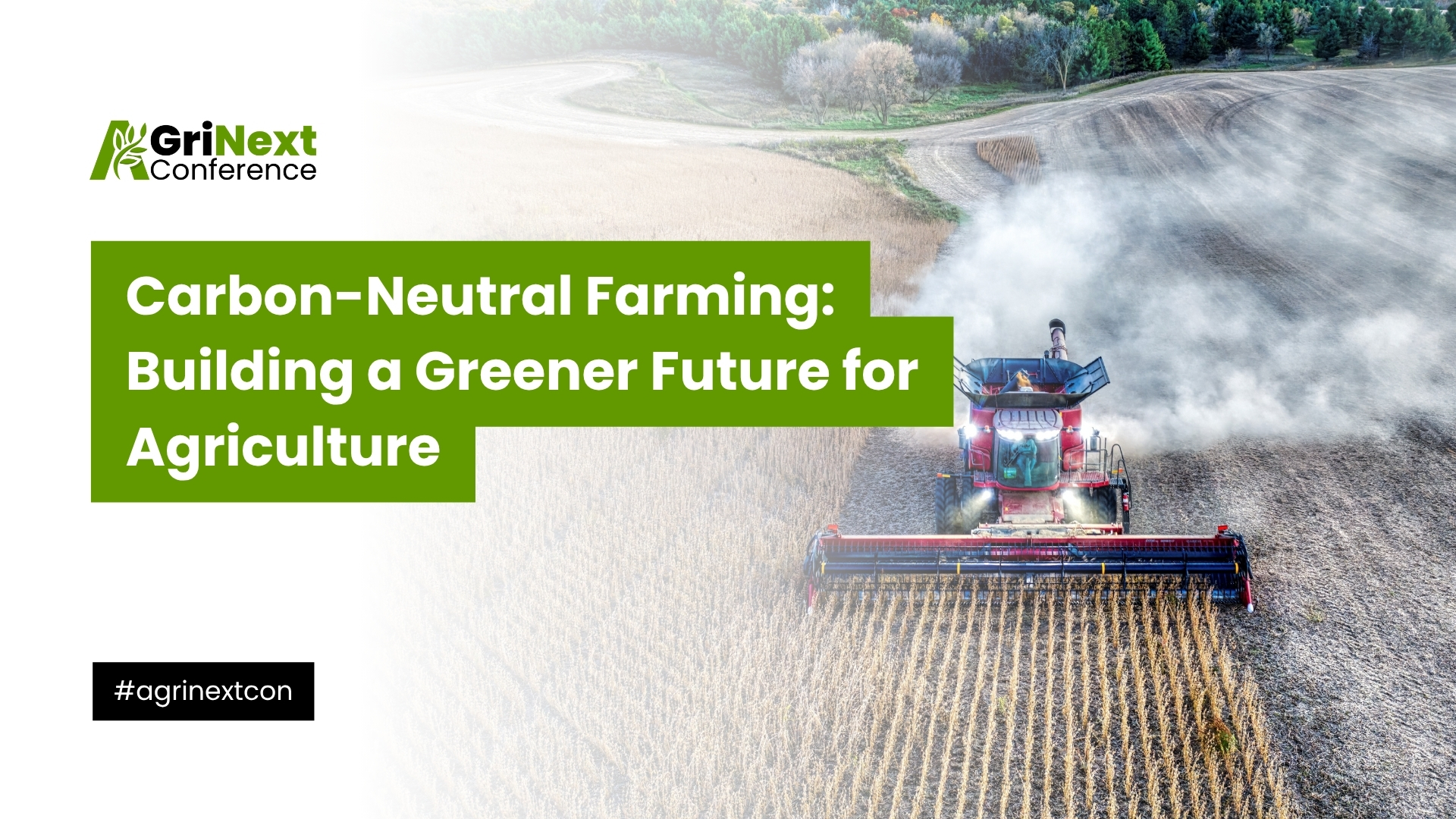
Carbon-neutral farming is emerging as a vital strategy to reduce agriculture’s carbon footprint while maintaining productivity. This approach balances greenhouse gas emissions produced by farming with measures that absorb or offset an equivalent amount of carbon dioxide, paving the way toward net-zero emissions in agriculture.
What does Carbon-Neutral Farming Look Like?
Carbon-neutral farming integrates a suite of sustainable practices that collectively reduce greenhouse gas emissions while enhancing soil health, water efficiency, biodiversity, and long-term productivity.
At the core of this approach lies soil carbon sequestration through techniques such as cover cropping, no-till farming, and agroforestry. These practices enrich soil organic matter, lock carbon underground, reduce erosion, and promote ecosystem biodiversity. For instance, Saudi Arabia’s Al Baydha Project demonstrates successful restoration of degraded arid lands using rainwater harvesting, terracing, and afforestation.
On-farm renewable energy systems—particularly solar and biogas—further cut emissions by powering irrigation and other operations sustainably. Dubai’s Bustanica vertical farm exemplifies this model, employing solar-powered climate controls and LED lighting that reduce water usage by 90–95% compared to traditional farming.
Precision agriculture, powered by AI, IoT sensors, and real-time analytics, enables farmers across the Middle East to optimize irrigation, fertilization, and resource allocation. This not only minimizes emissions from input overuse but also improves yields. Smart irrigation systems in Tunisia and the UAE highlight the value of technology in water-scarce regions.
Controlled-environment agriculture, including vertical, hydroponic, and aquaponic systems, further improves resource efficiency by recirculating water and optimizing growth conditions year-round. These systems allow dense crop production even on limited land, making them especially valuable for urban and desert regions.
Participation in carbon markets complements these efforts by providing financial incentives to farmers who adopt emission-reducing or carbon-sequestering practices. Emerging initiatives in Morocco and Saudi Arabia are designing carbon credit frameworks linked directly to sustainable agriculture.
By integrating these solutions, carbon-neutral farming not only reduces agriculture’s carbon footprint but also enhances resilience and productivity—an especially vital goal given the climate challenges of the Middle East. These innovations will be showcased at the AgriNext 2025 conference in Dubai, which aims to accelerate knowledge exchange and drive progress toward a sustainable agricultural future for the region.
Carbon Farming in the Desert
In the UAE, several projects are exploring carbon sequestration directly on arid lands. For instance, research on desert shrubs like Jatropha suggests that one hectare could capture up to 25 tonnes of CO₂ annually over 20 years. These carbon farms represent a practical avenue to offset emissions within the agriculture and land-use sectors.
Renewable energy integration also plays a key role. The Sahara Forest Project in Qatar combines solar power with saltwater-cooled greenhouses to produce food, water, and clean energy simultaneously—turning desert areas into productive landscapes while reducing greenhouse emissions.
Beyond technology, achieving carbon neutrality in agriculture depends on community engagement and supportive policy frameworks. Governments across the Middle East are increasingly linking agricultural carbon reduction programs to national climate strategies and developing mechanisms to monetize carbon credits, further incentivizing sustainable practices.
AgriNext – Accelerating the Green Transition
The upcoming AgriNext 2025 Conference in Dubai (November 5-6) will gather over 60 speakers and 50 exhibitors to explore innovations driving carbon-neutral farming and food security. From regenerative soil management and AI-driven precision tools to renewable-powered production systems, the event will showcase how carbon neutrality can become a cornerstone of the region’s agricultural transformation.
Conclusion
Carbon-neutral farming represents a transformative path aligning productivity with ecological responsibility. The Middle East’s unique challenges—extreme climates, limited water, and food security pressures—are spurring innovation that proves sustainability and profitability can coexist. Through collaboration among farmers, investors, and policymakers, the vision of producing abundant food with minimal carbon impact is no longer distant—it is within reach.
Sources
National Library of Medicine:Carbon Neutrality in the Middle East and North Africa: The Roles of Renewable Energy, Economic Growth, and Government Effectiveness
Najd Agritech:How Carbon farming Is Revolutionizing Agriculture in Saudi Arabia
Signup For AgriNext Conference Newsletter




 Reach us on WhatsApp