
Nitrogen is an indispensable accelerator of modern crop yields, but its inefficient use often leads to ecological degradation. For decades, the agricultural industry has relied on a linear use-and-lose model, which allows costly fertilizers to wash away as runoff, polluting vital waterways and resulting in significant losses for producers. Biological nitrogen recovery is enabling the sector’s shift toward a more circular economy.
This key technology delivers a data-driven approach to capturing and reusing nitrogen resources. It turns cost into profit and paves the way toward sustainability for large-scale farms, golf courses and more.
The High Cost of a Linear Nitrogen System
https://unsplash.com/photos/6d_NRT0qtI4
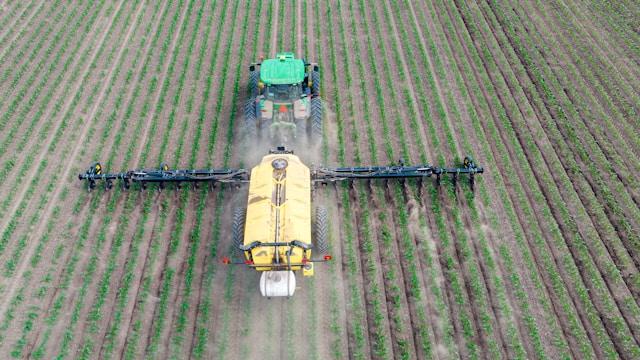
Traditional agricultural operations have utilized a take-make-waste model of nutrient management, in which growers apply nitrogen-containing fertilizers to their fields to support crop growth. Yet, uptake is usually insufficient and creates a system in which valuable resources become lost.
The amount of waste is astonishing, with one study suggesting that developing countries lose between 40% and 68% of nitrogen fertilizer applications to the environment. As a result, these regions experience soil depletion, water pollution and higher greenhouse gas emissions.
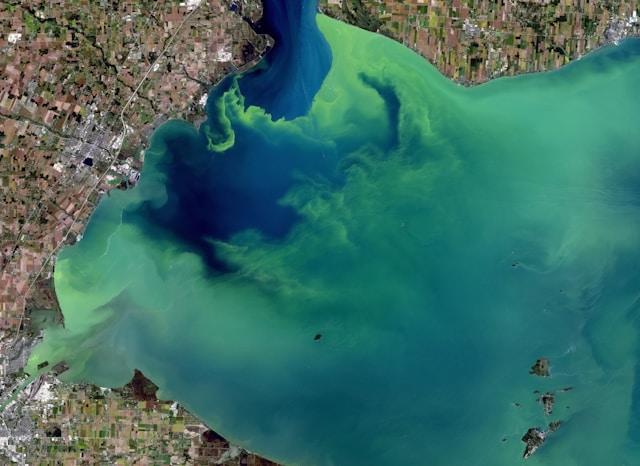
The U.S. Environmental Protection Agency also highlights how nitrogen runoff contributes to eutrophication, creating harmful algal blooms and oxygen-depleted dead zones in water systems. These events lead to mass fish die-offs, biodiversity loss, and an inability to use water for drinking and recreation.
The Circular Shift — An Overview of Biological Nitrogen Recovery
https://unsplash.com/photos/a-machine-in-the-field-sgOU6PJKo24
Biological nitrogen recovery is a robust strategy that leverages cutting-edge technology to boost natural cycles and treat nutrient-rich wastewater from agricultural operations. The method employs microorganisms in a sophisticated, two-step process.
Typically, during nitrification, a group of bacteria converts toxic ammonia from wastewater into nitrate. Then, a second set of bacteria turns the nitrate into harmless nitrogen gas, which is safely emitted into the atmosphere — this is denitrification.
Advanced systems are building circularity by capturing the nitrogen and similar nutrients, turning them into a reusable and valuable product. Once recovered, the nitrogen is converted into a slow-release fertilizer and re-enters the agricultural value chain. Its benefits include improved soil structure and microbial health, reduced reliance on fossil fuel-derived fertilizers, lower emissions, and decreased water contamination.
Real-World Case Studies
Despite the environmental harm that excessive nitrogen can cause, it remains an essential nutrient for helping crops grow and ensuring golf courses remain green. On the modern farm and beyond, operators can adopt circular approaches to nitrogen fertilizer applications and recovery.
On the Modern Farm
Rather than perceiving manure and sludge as disposal issues, many farms are employing nutrient recovery mechanisms to produce valuable products. Ostara Nutrient Recovery Technologies is one of several pioneers shaping the $390 million global market for nutrient capture systems. Although commonly implemented in municipal plants that process agricultural waste, it also applies to actual farm operations.
The primary return on investment (ROI) comes with proper waste management in the production and sale of premium fertilizer. The systems help prevent the accumulation of struvite — mineral deposits from nutrient overload — in pipes, resulting in lower maintenance costs and downtime. Additionally, recovering nutrients from water before discharge enables farmers to comply with stringent environmental regulations and avoid potential fines and lawsuits.
Nitrogen recovery for fertilizer also reduces greenhouse gas emissions associated with the manufacturing of conventional synthetic fertilizers. In a time when 50% of consumers prioritize healthier food options, the sustainability of nutrient capture aligns with this trend.
Beyond the Farm

https://unsplash.com/photos/aerial-view-of-green-lake-UyTfzNdLHzs
Beyond farm operations, golf courses are undergoing a significant transformation to improve sustainability, particularly through improved nutrient management. In a survey of 1,529 U.S. golf facilities, the use of nitrogen and phosphate declined by 80% from 2006 to 2014. The reduction was primarily due to stricter federal and state regulations restricting fertilizer applications on turfgrass.
Interestingly, the study revealed that facilities that performed regular soil testing applied more nutrients than those that did not. This suggests that, although there is greater focus on conservation, the need for high-quality turf still requires substantial nutrient inputs.
Superintendents must balance providing the turf what it needs to be healthy without further damaging the environment. It is this challenge that makes on-site nutrient recovery and water recycling essential and viable solutions.
Driving a Circular Future With Nitrogen Recovery
The future of agriculture is becoming more circular due to biological nitrogen technology. Advancements that enhance natural processes serve as a cornerstone of sustainable growing operations. Of course, farms are but one of the many green spaces that benefit from capturable and reusable fertilizers. In practice, this approach translates to a more resilient, profitable and environmentally friendly business strategy for years to come.