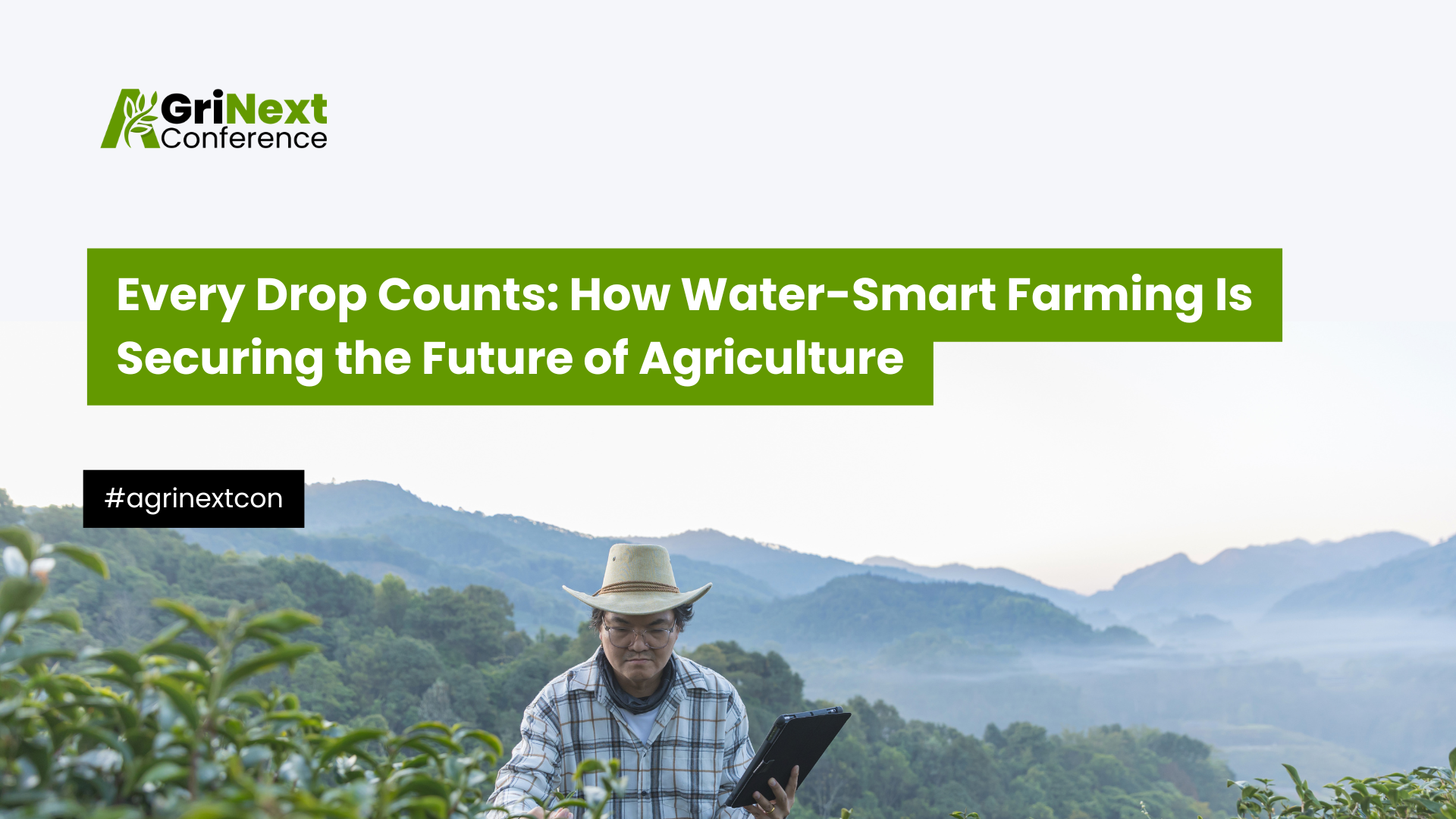
Agriculture consumes nearly 70% of the world’s freshwater, and demand is projected to rise by 19% by 2050, highlighting the urgent need for smarter water management. As climate change intensifies droughts and erratic rainfall, efficient water use has become essential for ensuring global food security. In this context, AI-driven precision agriculture is transforming how water is managed on farms. By combining advanced technologies with sustainable practices, water-smart farming is emerging as a powerful approach to optimize water use while maintaining productivity.
Across the global agritech ecosystem, innovators are now focusing on solutions that help farmers produce more food while using significantly less water.
Tech Driving Efficiency
Technologies are playing a crucial role in making water-smart farming a reality. Drip irrigation delivers water directly to plant roots, significantly reducing evaporation and runoff. Studies in California sweet corn and Indian banana farms show it can save 37–56% of water while increasing yields by 26–50%.
IoT-based soil moisture sensors combined with AI platforms such as Vassar Labs’ aquaIRRIGATION help farmers determine exactly when and how much water crops need. By analyzing real-time soil and weather data, these systems can reduce water consumption by up to 40%, benefiting thousands of farmers.
In addition, satellite imagery and agricultural drones allow farmers to detect crop water stress early. This enables targeted irrigation and faster interventions, improving crop resilience—especially in arid and water-scarce regions.
Real-World Wins
Real-world results are already emerging. In the UAE’s Mleiha Farms in Sharjah, AI, sensors, and satellite data enabled predictive irrigation that reduced water use by around 40% in wheat farming, demonstrating the potential of water-smart agriculture even in extreme climates.
Meanwhile, Australia's COALA project achieved a 20% increase in irrigation efficiency, while also improving crop yields by 20–30%. Similarly, farmers in Maharashtra, India using AI-driven monitoring solutions from CropIn have reported 30–50% lower irrigation needs in sugarcane cultivation, helping them manage uncertain monsoon seasons while improving profitability.
Across different agricultural regions, such innovations are helping farmers optimize irrigation, reduce resource waste, and maintain stable crop yields. Organizations like the Food and Agriculture Organization (FAO) continue to promote these approaches under Climate-Smart Agriculture to scale sustainable water management globally.
Spotlight: AgriNext Awards & Conference 2026
Such innovations will take center stage at the AgriNext Awards & Conference in Dubai (September 17-18, Crowne Plaza Deira), which celebrates breakthroughs in precision farming and sustainable agriculture—particularly relevant for regions facing water scarcity. The event highlights how technologies such as AI-driven irrigation, IoT sensors, and precision agriculture tools are helping farmers optimize water use and improve productivity in challenging climates.
Water-smart farming proves that agriculture can produce more while using fewer resources, helping safeguard water supplies in an increasingly uncertain climate.
Join the shift toward smarter agriculture at AgriNext. Register at agrinextcon.com.