
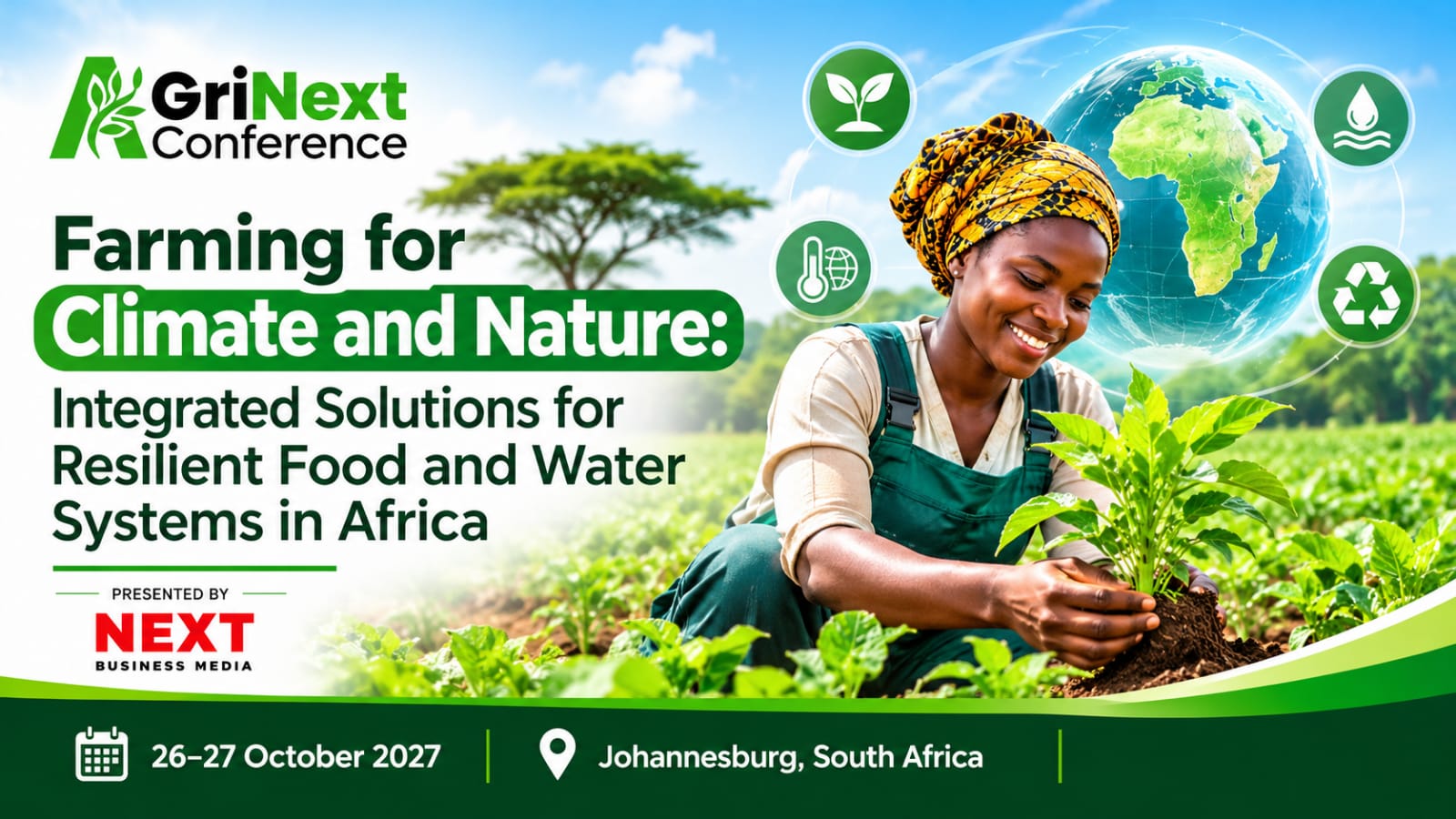
Africa’s farms sit at the center of one of the world’s most urgent challenges: producing enough nutritious food while protecting the ecosystems, water supplies, and biodiversity on which agriculture depends. Climate change threatens not only crops and livestock but also contributes to biodiversity loss, water stress, soil degradation, and health risks. At the same time, the way land, water, and natural resources are managed in agriculture can either intensify these challenges or become part of the solution.
For African farmers, agribusinesses, policymakers, and innovators, the question is no longer whether to act on climate and nature, but how to take practical steps that strengthen food security, conserve water, restore ecosystems, and improve livelihoods together.
A connected crisis
Climate change and biodiversity loss reinforce one another. Rising temperatures, erratic rainfall, droughts, floods, and extreme weather reduce crop yields, damage soils, disrupt pollination, and increase pressure from pests and diseases. In turn, land conversion, deforestation, unsustainable irrigation, monoculture expansion, and excessive chemical use can accelerate biodiversity loss and increase greenhouse gas emissions.
This creates a dangerous cycle. As ecosystems degrade, farms become less resilient to droughts and floods. When agricultural productivity declines, pressure increases to convert more land and extract additional water. The Food and Agriculture Organization (FAO) identifies changes in land and water use and management among the major drivers of biodiversity loss affecting food and agriculture, alongside pollution, overexploitation, climate change, and population growth.
The consequences are particularly serious in Africa, where many smallholder farmers depend directly on rainfall, healthy soils, forests, fisheries, and other natural resources. FAO estimates that 70–80 percent of smallholders depend on agriculture and renewable natural resources for their income, food, nutrition, and wellbeing. Climate extremes have also affected an average of 16 million people annually in Africa over the past decade, causing an estimated USD 0.67 billion in damage each year.
Water, food, and health
Water is the clearest example of why climate action cannot be separated from biodiversity and food security. Agriculture accounts for about 72 percent of global freshwater withdrawals, yet climate change is making water availability less predictable in many regions. In Africa, water scarcity, drought, flooding, and land degradation can reduce harvests, raise food prices, and increase competition between farms, households, and ecosystems.
These pressures also affect health. Climate change can reduce crop yields and nutritional quality, disrupt access to diverse foods, and expand the conditions in which pests, pathogens, and disease vectors thrive. A food system that degrades soils and pollutes water may produce calories today, but it can undermine the long-term foundations of nutrition, public health, and rural livelihoods.
The solution is not simply to produce more food. It is to produce food in ways that regenerate the natural systems agriculture relies upon.
Integrated solutions
African agriculture already offers practical examples of integrated climate-and-nature solutions.
Agroforestry combines trees with crops or livestock. Trees provide shade, improve soil moisture, reduce erosion, support pollinators and beneficial insects, and store carbon. Well-designed agroforestry systems can restore degraded land while improving agricultural productivity and building climate resilience.
Regenerative soil management includes practices such as composting, mulching, cover cropping, reduced tillage, crop diversification, and integrated nutrient management. These approaches can improve soil organic matter, water retention, and microbial activity. Healthier soils retain more water during dry periods and reduce runoff during heavy rainfall.
Water-smart irrigation uses precision technologies, rainwater harvesting, drip irrigation, and scheduling based on crop and soil requirements. These approaches help farmers use water more efficiently while maintaining productivity, particularly as climate variability increases.
Biodiversity-friendly landscapes protect pollinators, natural pest controllers, seed dispersers, and genetic diversity. Maintaining hedgerows, native vegetation, wetlands, and diverse cropping systems can support agricultural productivity and strengthen ecosystem resilience over time.
Climate-smart agriculture brings these practices together. It aims to increase agricultural productivity, strengthen adaptation to climate change, and reduce greenhouse gas emissions where possible. The approach also recognizes that farmers need economically viable livelihoods alongside environmental improvements.
Avoiding trade-offs
Not every climate intervention automatically benefits nature, water, food security, or health. Large-scale monoculture tree planting, poorly planned irrigation, and land-use changes that displace food production can create new environmental and social challenges. Effective climate policy must therefore consider trade-offs across the wider nexus of biodiversity, water, food, nutrition, health, energy, and livelihoods.
The FAO highlights the water–energy–food–ecosystems (WEFE) nexus as an approach to improving resilience, maximizing synergies, and making agrifood systems more sustainable. In practice, this means designing projects in collaboration with farmers and local communities, measuring outcomes beyond agricultural yields, and investing in solutions that deliver multiple benefits.
The opportunity for Africa
Africa does not need to choose between food security and environmental protection. With the right investments, knowledge, technology, and policy support, agriculture can become a driver of climate resilience and ecosystem restoration.
The opportunity is significant because agriculture remains central to many African economies. The African Development Bank reports that agriculture contributed between 30 and 60 percent of GDP, depending on the country, in 2021. The sector also employs more than 60 percent of the continent's working population across the agricultural value chain. Supporting farmers in adopting nature-positive, water-efficient, and climate-resilient practices can therefore deliver benefits across food systems, rural economies, and ecosystems.
Data that shows the stakes
•Agriculture accounts for approximately 72 percent of global freshwater withdrawals, making water-efficient farming essential for climate resilience and long-term food security.
•Agrifood systems contribute approximately 35 percent of global greenhouse gas emissions, highlighting the importance of more sustainable agricultural production and food supply chains.
•Between 2008 and 2018, agriculture absorbed 26% of the overall economic impact of natural-hazard-induced disasters in least developed countries and low- and lower-middle-income countries.
•During the same period, agriculture absorbed 82 percent of all drought-related impacts in low- and lower-middle-income countries, demonstrating why drought resilience is central to African food systems.
• Around 70% of Africans depend on agriculture for their livelihoods, making farm-level resilience critical to livelihoods, food security and rural development.
•Climate change, drought and land degradation pose growing risks to agricultural productivity, soil health and food security across vulnerable African landscapes.
Join the conversation at AgriNext Africa
AgriNext Awards and Conference Africa brings together farmers, innovators, investors, researchers, agribusinesses, and policymakers to advance practical solutions for sustainable farming, soil health, water management, biodiversity, climate resilience, and food security.
Join AgriNext Africa and help shape farming systems that protect climate, nature, water, food, and health—for Africa’s farmers and future generations.