
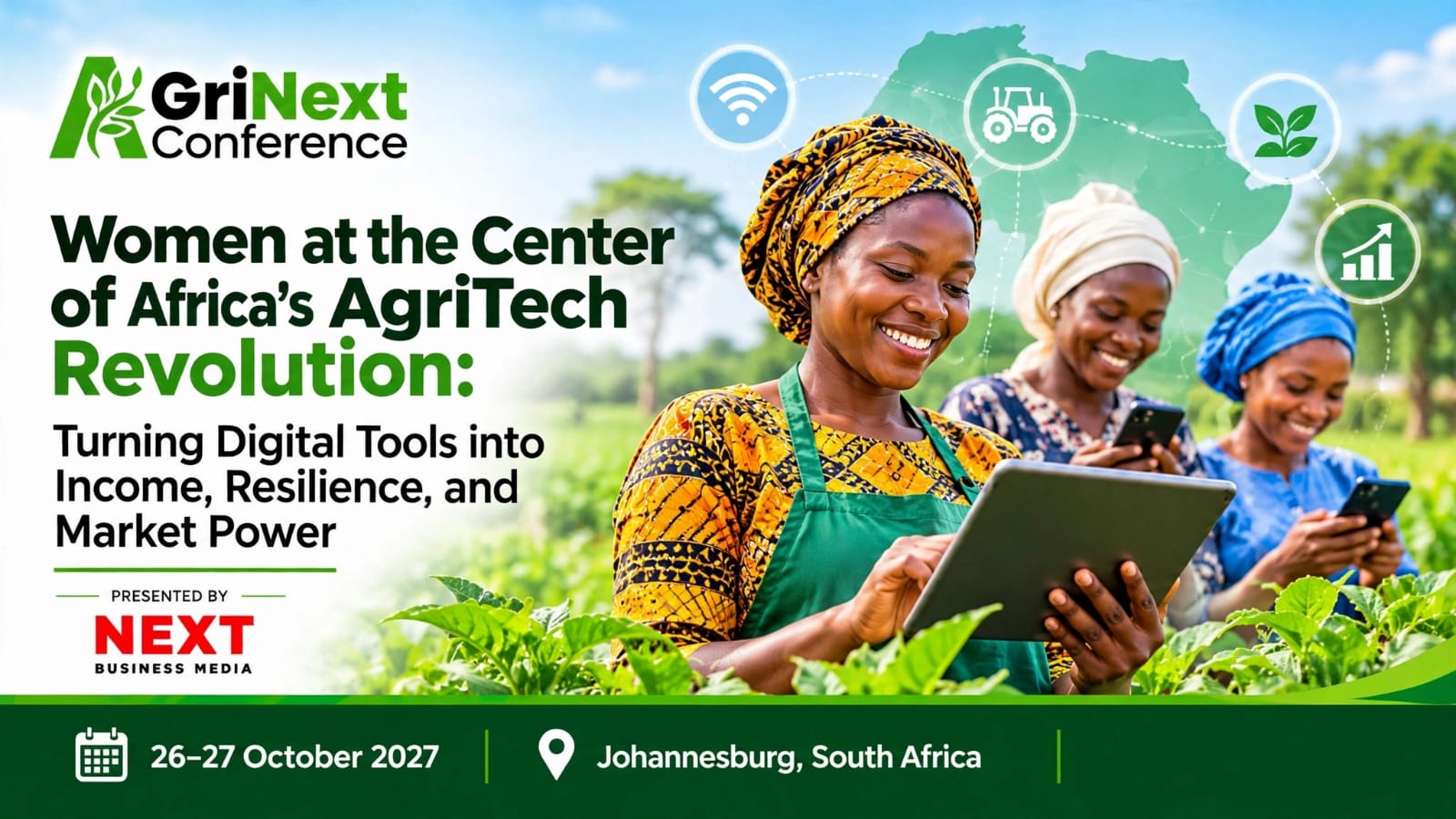
Across Africa, women are not merely participants in agriculture—they are producers, processors, traders, innovators, and community leaders. Yet their contribution remains constrained by unequal access to land, finance, technology, training, and markets. As Africa’s agritech sector expands, placing women at the center of digital agriculture could convert a long-standing gender gap into a major opportunity for productivity, food security, and rural prosperity.
Women are central to Africa’s agrifood systems. According to the FAO, 76 percent of working women in sub-Saharan Africa are employed in agrifood systems, the largest share worldwide. Women also account for 63 percent of the region’s off-farm agrifood workforce. Despite their contribution, they remain concentrated in lower-paid activities and often face greater difficulties accessing land, credit, agricultural inputs, machinery, extension services, and markets.
The digital opportunity
Mobile technology, digital advisory services, e-commerce platforms, and digital finance can help reduce many of these barriers. These solutions can deliver localized weather forecasts, pest alerts, agronomic advice, market prices, and financial services directly to farmers’ phones, often at a lower cost than traditional extension systems.
However, access to these technologies remains unequal. According to the GSMA’s Mobile Gender Gap Report 2025, women in low- and middle-income countries were 14 percent less likely than men to use mobile internet in 2024. In sub-Saharan Africa, the mobile internet gender gap stood at 29 percent. This means many rural women risk missing out on the benefits of digital agriculture because of limited connectivity, smartphone access, affordability, and digital skills.
Digital finance offers another important opportunity. The World Bank’s Global Findex 2025 found that 40 percent of adults in sub-Saharan Africa had a mobile-money account in 2024, up from 27 percent in 2021. This growth highlights the potential of mobile financial services to improve access to savings, payments, and other financial tools. However, women continue to face barriers to financial inclusion, making gender-responsive product design essential.
From access to agency
Technology alone will not close gender gaps. A woman may receive a weather alert, but still be unable to act on it if she lacks land rights, working capital, irrigation, transport, or decision-making power within her household or cooperative.
FAO highlights a capacity-funding paradox: women agripreneurs may have the skills and potential to succeed in technology-driven agriculture, yet remain underfunded because of systemic barriers in capital allocation. The solution is not simply to provide women with phones or applications. Digital tools must be combined with access to credit, insurance, training, secure land rights, and stronger market connections.
Practical examples show what this approach can look like. In Kenya, FAO’s Women’s Empowerment–Farmer Business School approach uses Amplio Talking Books, offline audio devices that deliver localized training on agribusiness, climate-smart agriculture, and gender equality. This approach is particularly valuable for rural women with limited literacy or unreliable internet access, as it makes agricultural knowledge available in a format that fits their daily lives
In Zimbabwe, FAO-supported rural finance initiatives have worked with microfinance institutions and commercial banks to develop women-friendly group-lending approaches and concessional credit for agricultural productivity and income-generating activities. These models recognize that traditional collateral requirements and limited property ownership can prevent women from accessing conventional loans.
A value-chain approach
Women’s economic opportunities should not be limited to primary production. They are active across the entire agrifood value chain as farmers, fishers, livestock keepers, wage workers, processors, traders, and entrepreneurs. Supporting women to expand into aggregation, cold storage, processing, packaging, logistics, and export can increase their incomes and strengthen local food systems.
The African Continental Free Trade Area (AfCFTA) creates new opportunities for women farmers, traders, and agripreneurs to reach regional markets. However, technical barriers to trade, complex customs procedures, and certification requirements can limit their participation. Gender-responsive trade facilitation, simplified customs processes, quality certification support, and access to digital market information will be essential to help women-led agricultural businesses benefit from regional trade.
Policymakers and investors should also measure outcomes beyond participation. A program may enroll thousands of women, but meaningful empowerment requires tracking whether they gain greater control over land, increase their incomes, access larger loans, adopt climate-smart practices, lead cooperatives, and participate in important business and community decisions.
The path forward
Africa cannot build an inclusive and resilient food system without addressing the barriers facing women across its agrifood workforce. The priority should be to design agritech and finance solutions with women, not simply for them.
This means involving women in product design, employing more women extension agents and agritech leaders, offering flexible repayment terms, improving rural connectivity, and protecting women's land and asset rights. It also requires stronger partnerships between governments, financial institutions, technology providers, agricultural organizations, and local communities.
When women gain equal access to resources, technology, finance, and markets, they can move from being overlooked contributors to active leaders in Africa’s agricultural transformation. The result can be more productive farms, stronger rural businesses, more resilient communities, and a food system better prepared for future challenges.
AgriNext Awards and Conference Africa
AgriNext is a global agriculture conference, expo, and awards platform that brings together agribusiness leaders, agritech innovators, investors, policymakers, researchers, and startups to advance innovation and sustainable growth in agriculture. Its Africa-focused agenda explores practical solutions, from AI-powered advisory services and digital farmer registries to digital finance, traceability, and post-harvest innovation, that can improve smallholder profitability and resilience.
Join AgriNext Awards and Conference Africa to connect with agritech innovators, investors, policymakers, and agribusiness leaders shaping a more inclusive, resilient, and profitable future for African agriculture.
Register now: agrinextcon.com