
For decades, modern agriculture has followed a familiar formula: apply synthetic fertilizers uniformly across a field and hope for consistent yields. But rising input costs, soil degradation, water constraints, and tightening environmental expectations are making that approach increasingly difficult to sustain.
The next advance in farming will not come from applying more inputs. It will come from applying the right inputs, in the right places, at the right time.
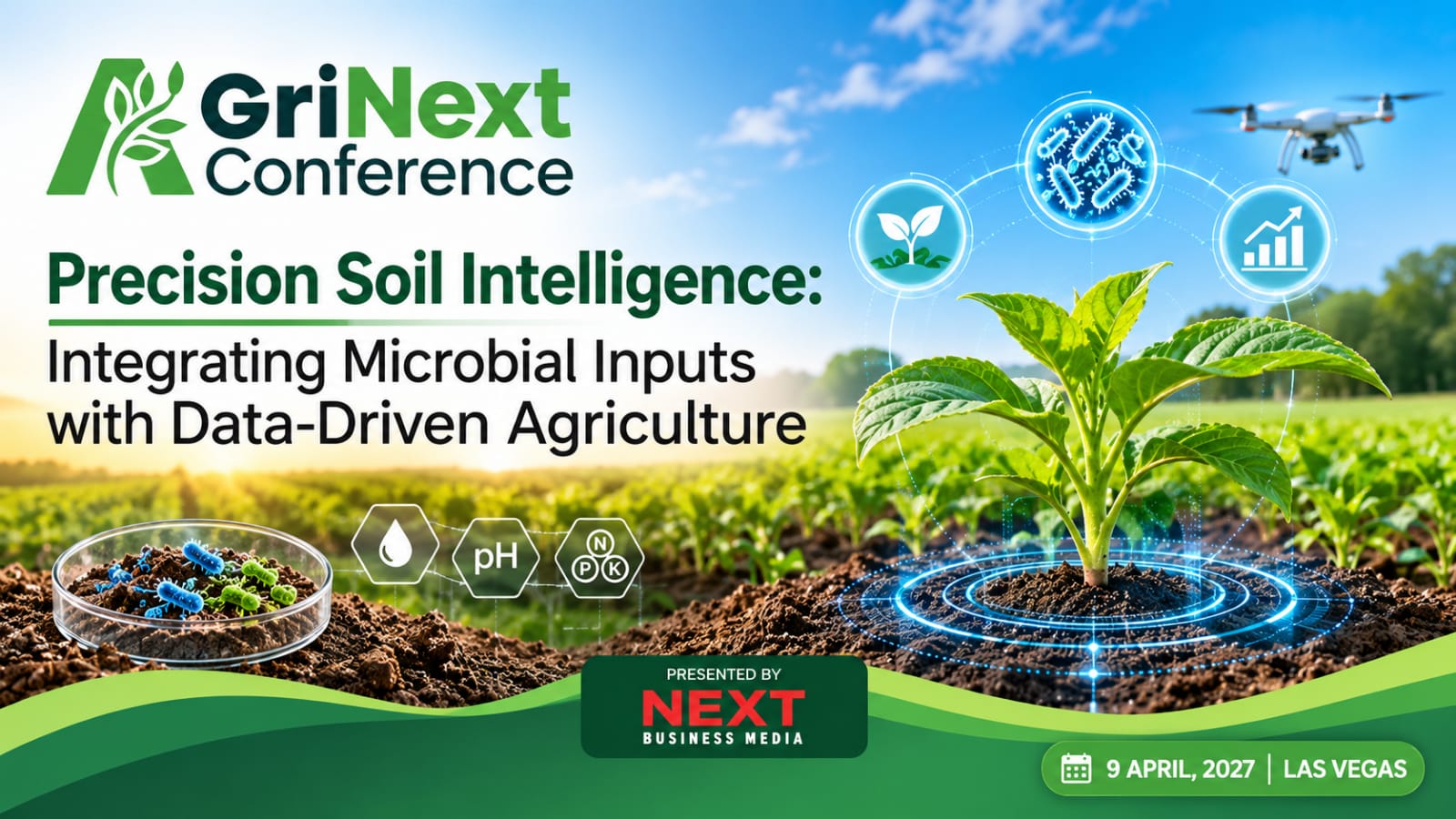
Welcome to the era of Precision Soil Intelligence—where biological inputs and real-time data analytics work together to improve crop nutrition, protect soil health, and make every application more accountable.
The Challenge with Biologicals Alone
Microbial inputs—such as nitrogen-fixing bacteria, phosphorus-solubilizing microbes, and mycorrhizal fungi—can improve nutrient availability, support root development, and reduce reliance on synthetic inputs.
But biologicals are living organisms. Their performance depends on soil temperature, moisture, pH, organic matter, and the existing microbial community. Applying them uniformly across a variable field can lead to inconsistent results and uncertain ROI.
The Solution
Precision agriculture turns soil variability into an advantage.
• High-resolution soil mapping identifies differences in soil chemistry, moisture, biology, and crop performance across field zones.
• Variable-rate application (VRA) uses prescription maps to target inputs where they are most likely to deliver a response.
• Predictive agronomy combines weather, soil moisture, crop stage, and historical data to identify optimal application windows.
Instead of guessing where biologicals will work, growers can make informed, zone-specific decisions.
The Benefits
Precision Soil Intelligence helps growers reduce input waste by targeting applications to responsive field zones. Precision nutrient management can also lower unnecessary input use, reduce runoff risks, and improve nutrient-use efficiency.
By aligning microbial applications with suitable soil and crop conditions, growers can improve the chances of successful establishment and performance. Targeted biological management can support nutrient availability and uptake, reduce reliance on synthetic fertilizers, and contribute to healthier, more resilient soils over time.
From Blanket Application to Precision Biology
Field evidence increasingly supports the value of combining soil diagnostics with biological inputs. Research reviews note that microbial inoculants can improve crop yields, plant growth, and soil properties, although their performance can vary substantially across field conditions.
A meta-analysis of 97 peer-reviewed studies found that microbial inoculants improved crop yields by approximately 22.25% through enhanced nutrient availability, while stress alleviation was an even more significant contributor to yield improvement. Other research has found that yield responses to inoculation can vary widely. In maize studies, observed increases ranged from 3% to 25%, although results were not always statistically significant or consistent.
That variability is precisely why precision matters. Combining soil testing, electrical conductivity (EC) mapping, moisture monitoring, and variable-rate application helps growers understand field variability and identify zones where microbial inputs may be more effective. These tools support better placement and timing of biological applications while allowing farmers to monitor crop responses and refine future decisions.
For example, rather than applying the same inoculant across every acre, a grower can use soil and moisture data to identify zones with favorable establishment conditions, apply a targeted rate, and monitor the response through yield maps and in-season crop data.
Join the Conversation at AgriNext Awards and Conference Las Vegas
Discover how Precision Soil Intelligence is transforming farming through microbial inputs, soil data, and AI-driven decisions at AgriNext Awards & Conference Las Vegas
April 9, 2027 | JW Marriott Las Vegas Resort & Spa
Register today and shape the future of sustainable agriculture.