
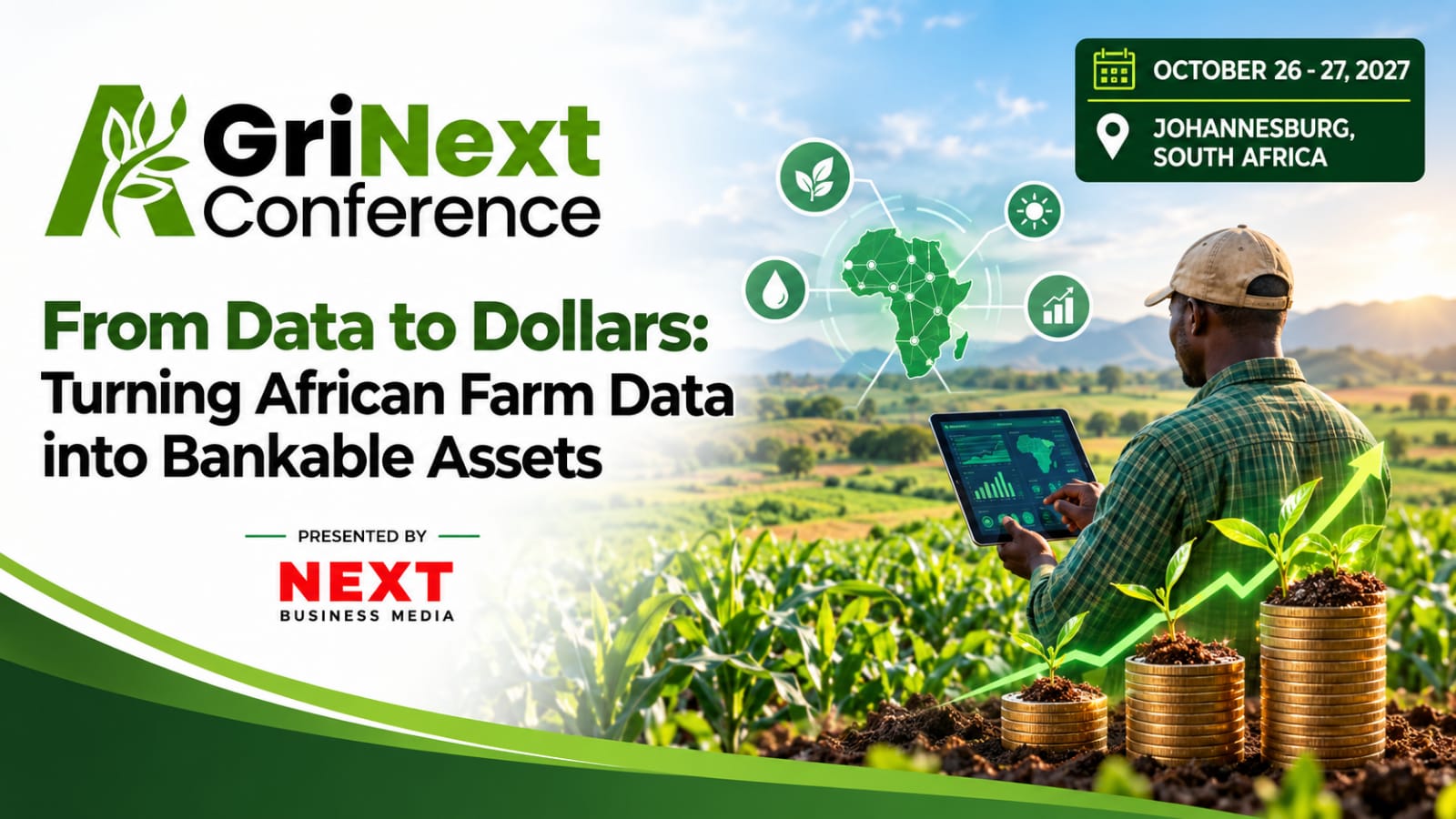
Across Kenya, Nigeria, and Ghana, satellites, sensors, mobile platforms, and AI are transforming how smallholder farms are measured and managed. The focus is shifting from simply collecting farm information to creating economic value from it for farmers and the businesses that serve them.
The next frontier for African agriculture is turning reliable farm data into bankable assets that can improve access to finance, reduce risk, unlock new revenue streams, and attract climate and agricultural investment.
Why this moment matters
Three shifts are creating the conditions for a data-to-dollars model.
AI and digital MRV are becoming more accessible. AI models can increasingly use satellite imagery, field records, weather data, and sensor information to support yield estimation, pest detection, soil monitoring, and emissions measurement. These capabilities can reduce the cost and complexity of monitoring, reporting, and verification (MRV) for agricultural and climate projects.
Carbon and nature markets are developing across Africa. Soil-carbon, agroforestry, and regenerative agriculture projects are creating new demand for credible farm-level data. Initiatives such as Kenya’s National Carbon Registry reflects the broader development of infrastructure for carbon-market participation, while methodologies designed for agricultural land management are creating frameworks for measuring and verifying climate outcomes.
Data-enabled agricultural infrastructure is attracting attention. Digital platforms are increasingly connecting farm information with insurance, input finance, offtake agreements, supply-chain traceability, and climate-related revenue. When these systems are connected, the same underlying farm data can potentially support multiple commercial applications.
Together, these developments point toward a new model: one reliable farm dataset supporting several revenue and financing pathways.
A real-world blueprint: Kenya’s smallholder carbon projects
Kenya provides an important example of how farm-level data can support climate finance. Projects including the Kenya Agricultural Carbon Project and the Livelihoods Mt. Elgon have worked with smallholder farmers in western Kenya since the late 2000s.
Farmers have adopted practices including agroforestry, composting, cover cropping, and improved land management. Project teams collect information on farming practices and environmental outcomes to support carbon accounting and verification.
The experience highlights three important lessons.
Productivity and climate goals can reinforce each other. Improved agricultural practices can support soil health, productivity, and resilience while contributing to carbon outcomes.
Carbon revenue can provide an additional income stream. Payments can supplement household income, although the value received by individual farmers varies depending on project structure, credit prices, costs, and benefit-sharing arrangements.
Data can be both a burden and an asset. Farm-level data collection can be costly, but digital MRV systems can reduce that burden while providing the evidence needed for credit issuance, traceability, and buyer confidence.
The central challenge is therefore not simply collecting more farm data, but building systems that are affordable for farmers, credible for buyers, and transparent in how the resulting value is distributed.
From farm data to financial value
The real opportunity lies in what happens when farm data becomes useful beyond a single application.
Reliable information on farming practices, crop performance, soil conditions, weather exposure, and environmental outcomes can support several parts of the agricultural value chain. Lenders can use it to improve risk assessment. Insurers can use it to develop more responsive products.
Agribusinesses can strengthen traceability and sustainability claims. Carbon projects can use it for monitoring and verification.
This creates the possibility of a shared data infrastructure: information collected once, with appropriate farmer consent and governance, can support multiple commercial applications.
But turning data into financial value is not just a technology challenge. Issues around ownership, consent, data quality, verification, privacy, pricing, and benefit-sharing will determine whether these models can scale. If farmers bear the cost of data collection without participating meaningfully in the resulting value, the model will struggle to earn long-term trust and adoption.
South Africa’s AgriCarbon offers one example of how digital monitoring can support agricultural carbon projects. The program uses data to track changes in farming practices and has issued carbon credits under Verra’s VM0042 methodology. Projects like this show how reliable farm-level information can connect agricultural practices with measurable environmental outcomes.
Emerging digital aggregation and tokenization initiatives in Africa are also exploring whether smallholder carbon assets can be combined into more accessible financial instruments. These approaches remain early-stage, with regulatory treatment, verification, market demand, ownership, and farmer benefit-sharing still requiring careful design.
The next step: making farm data investable
For African agriculture, the long-term opportunity is not simply to collect more data. It is to build trusted systems in which high-quality farm information can reduce uncertainty and support real economic transactions.
That could mean better access to finance, more accurately priced insurance, stronger agricultural supply chains, additional income from verified environmental outcomes, and new forms of climate finance. The underlying principle is straightforward: when farm-level information becomes reliable, verifiable, and commercially useful, it can become part of the infrastructure through which agricultural value is financed.
This is where the conversation around African agritech is moving—from data collection to data utility, and from digital tools to financial infrastructure.
AgriNext Awards and Conference Africa brings this transformation into focus. The event connects the development of agricultural technology with the realities of finance, food-system resilience, climate investment, and smallholder livelihoods—creating a space where innovators, investors, and policymakers can design the models that turn farm data into investable assets.