
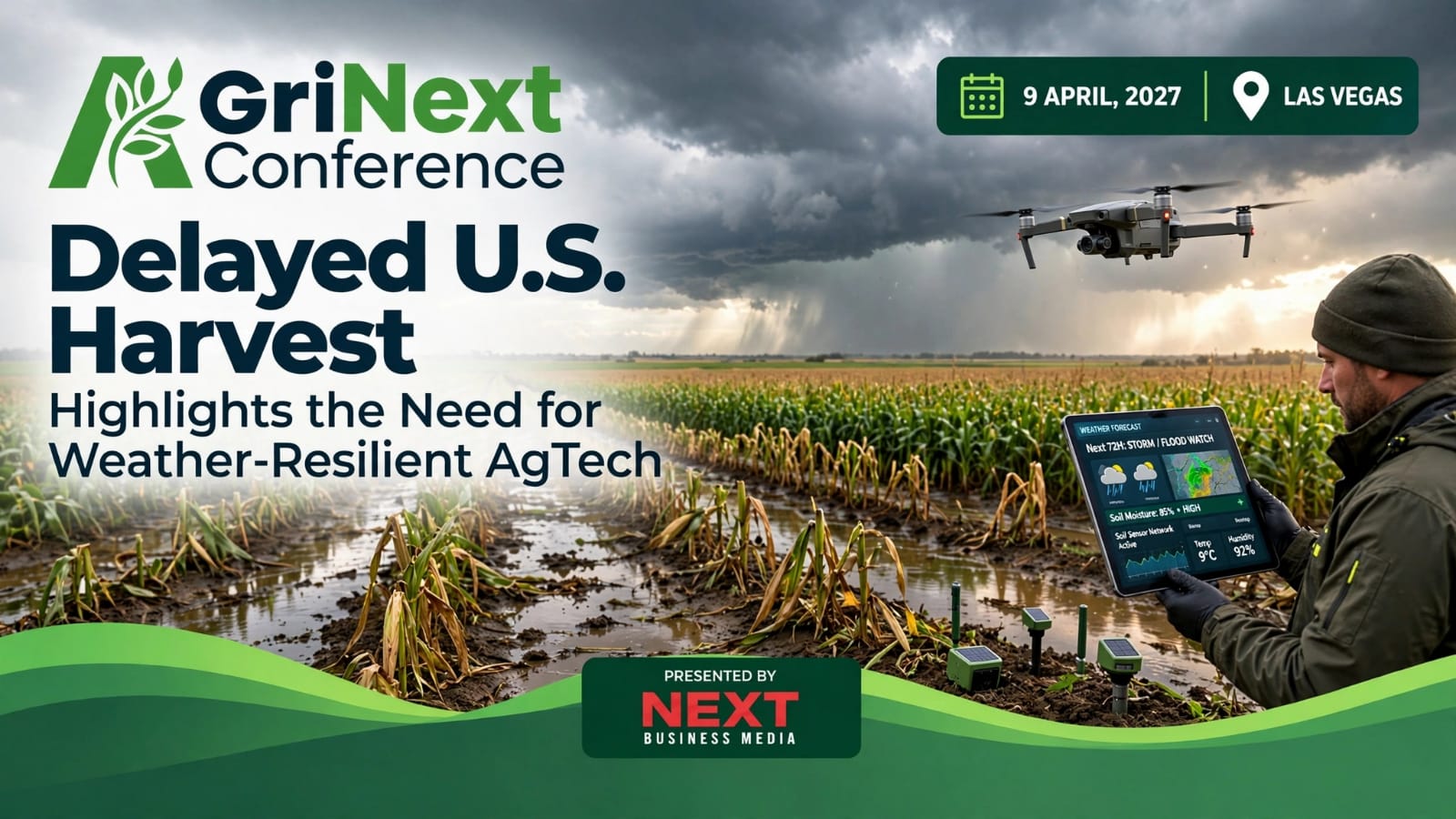
Following one of the wettest Septembers on record, delays in the U.S. corn and soybean harvest are highlighting the need for weather-resilient technologies, from predictive analytics and satellite monitoring to autonomous farm machinery.
The USDA’s latest Crop Progress report rated 72% of the U.S. corn crop and 70% of the soybean crop as good to excellent for the Sept. 28–Oct. 4 reporting period. Yet heavy rainfall has limited farmers’ ability to enter fields, particularly in Iowa, where only 7% of corn crop and 5% of soybeans crop had been harvested. Both figures were significantly below their five-year averages.
Iowa farmers had just 1.2 days suitable for fieldwork during the reporting period. At the same time, 85% of the state’s corn had reached maturity, while 81% of soybeans were dropping leaves, creating a narrow and increasingly important window for harvest.
The situation demonstrates why agricultural resilience must involve more than maintaining crop yields. Farmers also need timely intelligence on soil moisture, field conditions, crop maturity and weather patterns. Satellite imagery, connected sensors, AI-based forecasting and autonomous machinery could help producers prioritize fields, reduce unnecessary equipment movement and make better use of limited dry-weather windows.
The impact also extends beyond the farm. Harvest delays can place pressure on grain storage, transport networks and local processors. In some parts of Iowa, wet conditions have already contributed to local supply constraints, with processors seeking soybean deliveries outside their usual sourcing areas.
For the agricultural technology sector, the lesson is clear: the next generation of innovation must help farmers operate under uncertainty. Technologies that connect weather intelligence with machinery, crop monitoring and supply-chain planning can help build more adaptive and sustainable food systems.
This is the kind of challenge AgriNext Las Vegas can bring into focus—how data, automation and climate-smart practices can help agriculture move from reacting to weather disruption toward anticipating and managing it.
Join AgriNext Las Vegas 2027
Discover how AI, automation, data-driven agriculture and climate-smart technologies can help farmers build more adaptive and resilient operations. Connect with agriculture leaders, innovators and investors shaping the next generation of agricultural technology.
Learn more: agrinextcon.com