
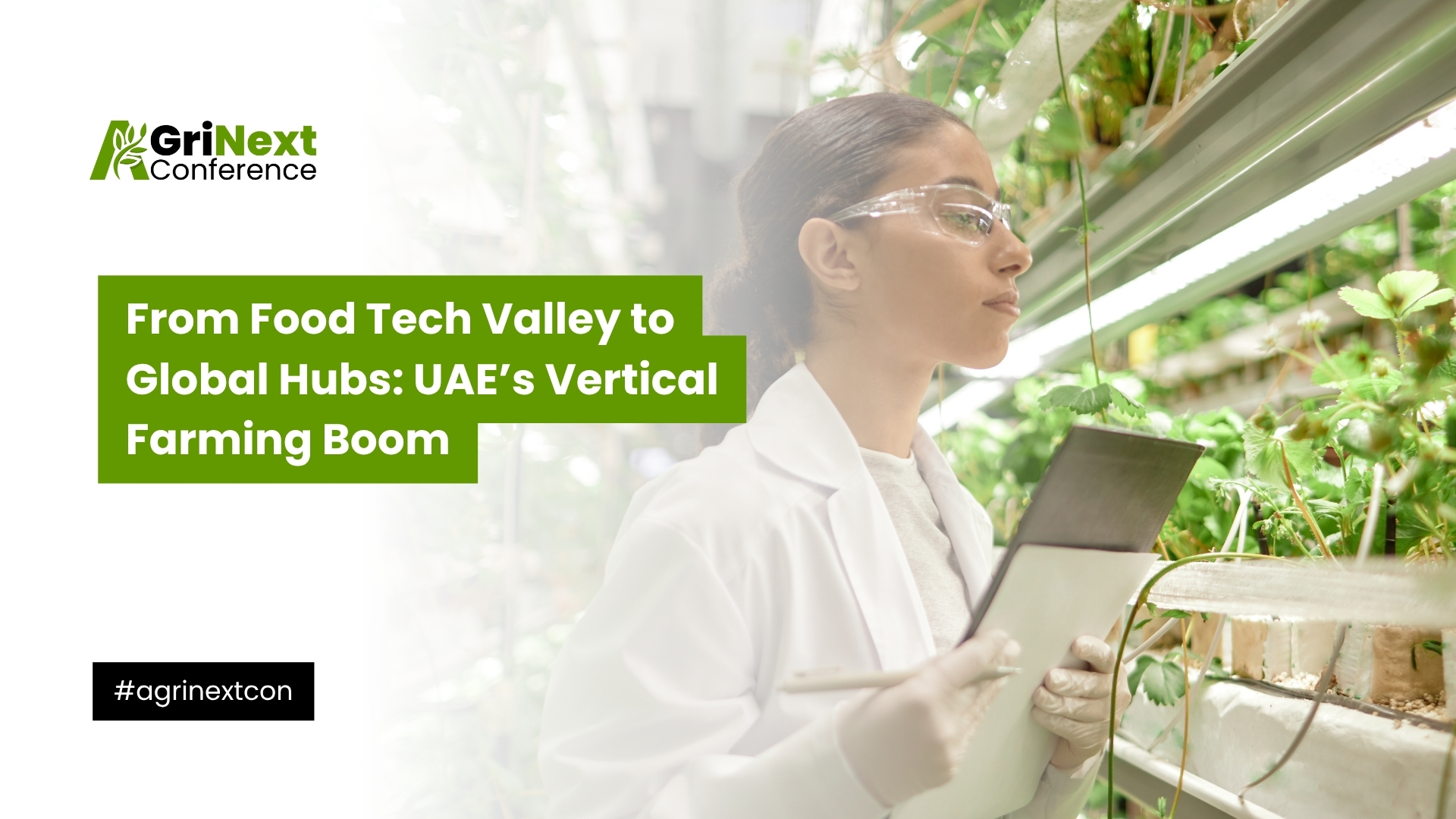
The UAE’s vertical farming sector is experiencing a remarkable boom, driven by technological innovation, supportive government initiatives, and urgent sustainability needs in an arid region with scarce arable land.
Through vertical farming, crops are grown in vertically stacked layers within climate-controlled environments, allowing year-round production using significantly less water and land compared to traditional farming. This transformation is positioning the UAE as a global food tech hub, moving from its “Food Tech Valley” roots towards world-leading vertical farming innovation centers.
As this sector expands, several key factors are fueling its rapid development across the Emirates.
UAE Vertical Farming Growth Drivers
The UAE vertical farming market was valued at around USD 92.4 million in 2024 and is expected to grow at a robust CAGR of over 20% through 2031. Key growth factors include:
Technological advancements such as AI-driven climate control, hydroponics, aeroponics, artificial intelligence, and advanced irrigation systems. These innovations reduce water use and boost yields, making it possible to cultivate crops efficiently in desert environments.
Government support through the National Food Security Strategy 2051, which promotes local food production via incentives, subsidies, tax benefits, and public-private partnerships. These initiatives encourage investment and innovation in controlled-environment agriculture.
Urbanization and space scarcity, which make vertical farming ideal for maximizing crop yield per square meter within city buildings and urban spaces, enabling production close to consumers.
Sustainability imperatives, emphasizing pesticide-free, fresh produce with a reduced carbon footprint due to shorter supply chains and localized production.
Leading Vertical Farming Examples in UAE
Emirates Bustanica: The world’s largest vertical farm (330,000 sq ft) located near Dubai World Central Airport. It grows leafy greens such as lettuce, spinach, and kale without using pesticides. Initially a joint venture, the facility was fully acquired in 2024, marking a major milestone in the UAE’s agri-tech leadership.
Pure Harvest Smart Farms: A pioneer in technology-driven greenhouses that achieve year-round, pesticide-free production in desert conditions. Their cutting-edge systems optimize water and energy use while delivering high-quality produce to both local and international markets.
ECO1 Vertical Farm: A collaboration between Crop One Holdings and Emirates Flight Catering, spanning 30,000 square meters and producing more than 900 tons of leafy greens annually. Using 95% less water than conventional field crops, ECO1 demonstrates how innovation can drive large-scale, sustainable food production. Its produce is served onboard Emirates flights and is also available locally, supporting the UAE’s goal of food self-sufficiency.
Impact on Food Security and Sustainability
Vertical farming plays a vital role in enhancing the UAE’s food security by enabling local production of fresh vegetables near consumer markets. This reduces reliance on imports and minimizes transportation emissions, contributing to lower carbon footprints. It also offers climate resilience by decoupling food production from harsh weather conditions and water scarcity—critical factors for sustainable agriculture in arid regions.
Innovations such as hydroponics and aeroponics further enhance resource efficiency, using up to 95% less water than traditional farming while delivering consistent yields. This makes vertical farming a cornerstone of the UAE’s broader sustainability and food security strategy, ensuring a reliable supply of nutritious produce even under extreme climate challenges.
AgriNext 2025 Highlight
AgriNext 2025, scheduled for November 5–6, 2025, in Dubai, will serve as a premier platform showcasing the latest AgriTech innovations, with a strong focus on vertical farming. The event will bring together global agribusiness professionals, investors, and policymakers to explore next-generation solutions in smart farming, precision agriculture, and climate-resilient food production.
It will further reinforce Dubai’s position as a global agri-innovation hub, fostering international collaboration, investment, and knowledge exchange across the agriculture sector.
Conclusion
UAE’s advancement from a regional “Food Tech Valley” towards becoming a global vertical farming hub represents a compelling model of how technology and sustainability can transform agriculture in arid urban environments, securing fresh food supplies for the future while minimizing environmental impact.
The upcoming AgriNext 2025 event will further spotlight these innovations and reinforce collaboration across the sector.This growth trajectory articulates UAE’s leadership in meeting future food production challenges sustainably and efficiently .
Signup For AgriNext Conference Newsletter




 Reach us on WhatsApp