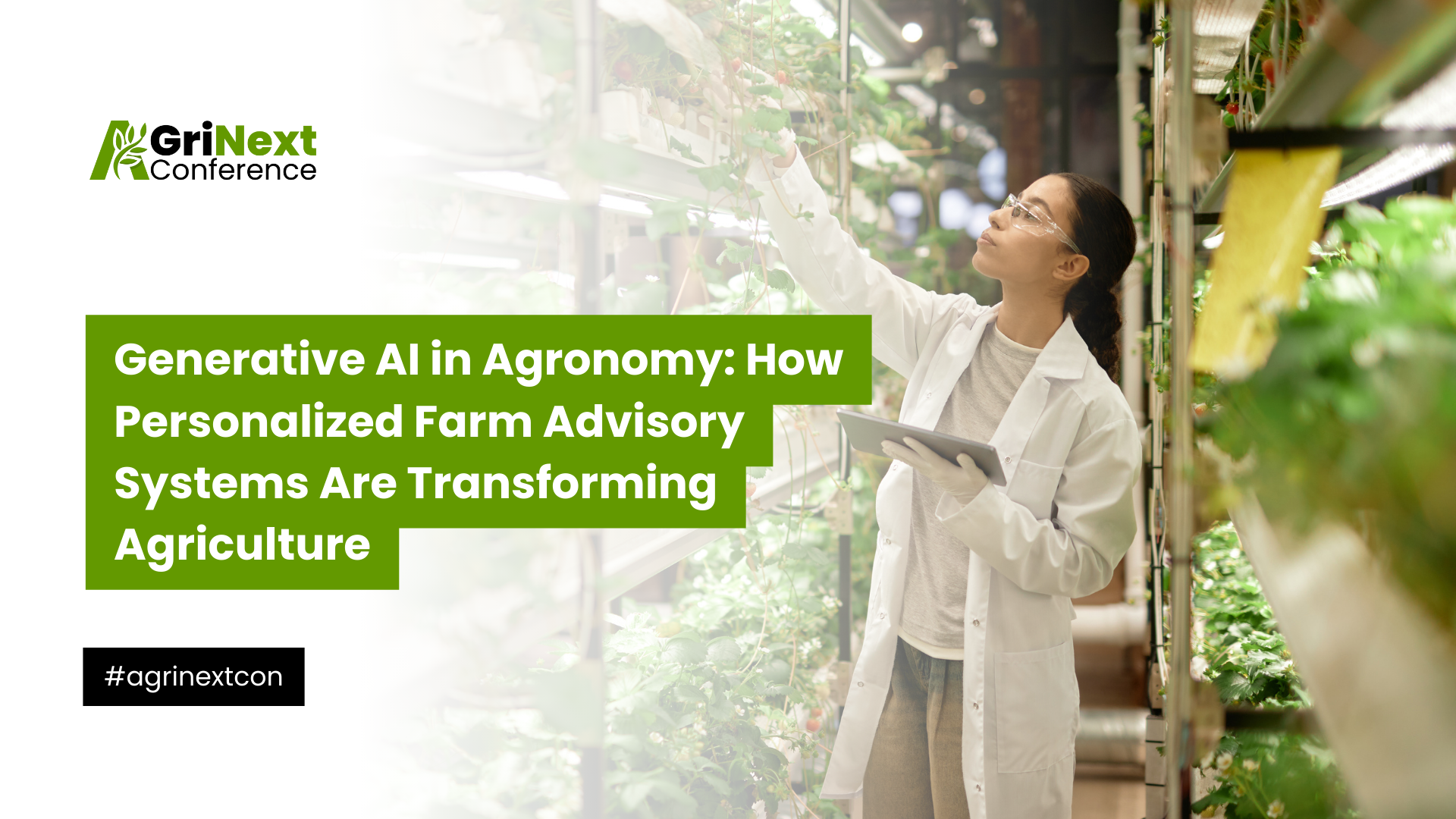
Agriculture is entering a new digital era. For decades, farmers have relied on generalized advisories, seasonal calendars, and past experience to make decisions about crops, inputs, and irrigation. Today, this approach is rapidly changing. With the rise of Generative Artificial Intelligence (Generative AI) and big data, farming is becoming personalized, predictive, and precision-driven. Agronomy is no longer only about soil and seeds — it is about data, algorithms, and intelligent systems that can tailor advice to each individual farm.
Generative AI refers to AI systems that do not just analyze data but also generate insights, recommendations, and scenarios. In agronomy, this means AI models can combine data from weather forecasts, satellite images, soil sensors, crop history, and market trends to create customized guidance for farmers — field by field, crop by crop, and even plant by plant.
From Generic Advice to Personalized Farming
Traditional farm advisory services often provide broad recommendations such as “apply fertilizer in early July” or “spray for pests after the first rain.” While useful, these are generalized and may not suit every region, soil type, or microclimate.
Generative AI changes this by enabling hyper-local and personalized agronomy. For example:
A farmer in Maharashtra growing cotton on sandy soil receives different irrigation and fertilizer advice than a farmer in Punjab growing wheat on loamy soil — even if the crop stage is similar.
AI systems can adjust recommendations in real time based on rainfall, temperature changes, pest outbreaks, or nutrient stress detected by sensors or satellites.
This level of personalization improves productivity while reducing waste, cost, and environmental impact.
How Generative AI Works in Agronomy
A personalized farm advisory system typically integrates:
- Satellite and drone imagery to monitor crop health, canopy cover, and stress.
- IoT soil sensors to track moisture, temperature, and nutrient levels.
- Weather data for forecasting rainfall, heat stress, or frost risk.
- Historical farm data such as yields, crop rotation, and pest records.
- Market data for price forecasting and harvest timing.
Generative AI models process this data and then generate tailored recommendations — when to irrigate, how much fertilizer to apply, whether disease risk is rising, or when harvesting should begin.
Instead of static dashboards, farmers receive dynamic advisories through mobile apps, SMS alerts, or voice assistants in local languages.
Real-World Examples
1. Microsoft + ICAR in India
Microsoft partnered with the Indian Council of Agricultural Research (ICAR) to develop AI-based sowing and advisory tools for farmers. These systems analyze weather, soil, and crop data to suggest optimal sowing dates and input usage, with ongoing expansions enhancing yield predictions. Farmers using these tools have reported improved yields and reduced climate risks .
2. IBM Watson Decision Platform for Agriculture
IBM’s platform integrates satellite data, weather models, and field data to deliver predictive insights on pest pressure, yield forecasts, and irrigation planning. It is used by agribusinesses and large farms worldwide to optimize operations and reduce risk.
3. CropIn and ClimateAi
Agri-tech companies like CropIn and ClimateAi use AI to help farmers manage climate risks, detect crop stress early, and optimize resource use. Their platforms provide personalized farm dashboards and predictive alerts.
Benefits for Farmers and the Environment
Personalized AI-driven agronomy offers multiple advantages:
Higher yields through timely and precise interventions.
Lower input costs by avoiding overuse of water, fertilizer, and chemicals.
Reduced environmental impact through efficient resource use.
Climate resilience by anticipating weather extremes and pest outbreaks.
Better decision-making with data-backed confidence instead of guesswork.
In regions facing climate uncertainty, labor shortages, and rising input prices, this shift is not just innovative — it is essential.
AgriNext Conference 2026
Scheduled for October 19-20, 2026, at Le Méridien Dubai Hotel & Conference Centre, this event by Next Business Media will spotlight generative AI, precision farming, and regenerative technologies in agriculture. Sessions on AI-driven crop management, smart farming, and sustainability will showcase personalized advisory innovations, attracting global leaders and startups.
Conclusion
Generative AI is redefining agronomy from a reactive practice into a proactive, intelligent system. By transforming vast amounts of data into personalized, actionable insights, AI empowers farmers to grow more with less — less water, fewer chemicals, lower costs, and reduced environmental impact. As digital tools become more accessible and affordable, personalized farm advisory systems will play a central role in ensuring food security, farmer profitability, and sustainable agriculture.Events like AgriNext 2026 will accelerate adoption of these systems globally. The future of farming is not only in the soil — it is also in the data, the models, and the intelligence guiding every decision
Signup For AgriNext Conference Newsletter




 Reach us on WhatsApp