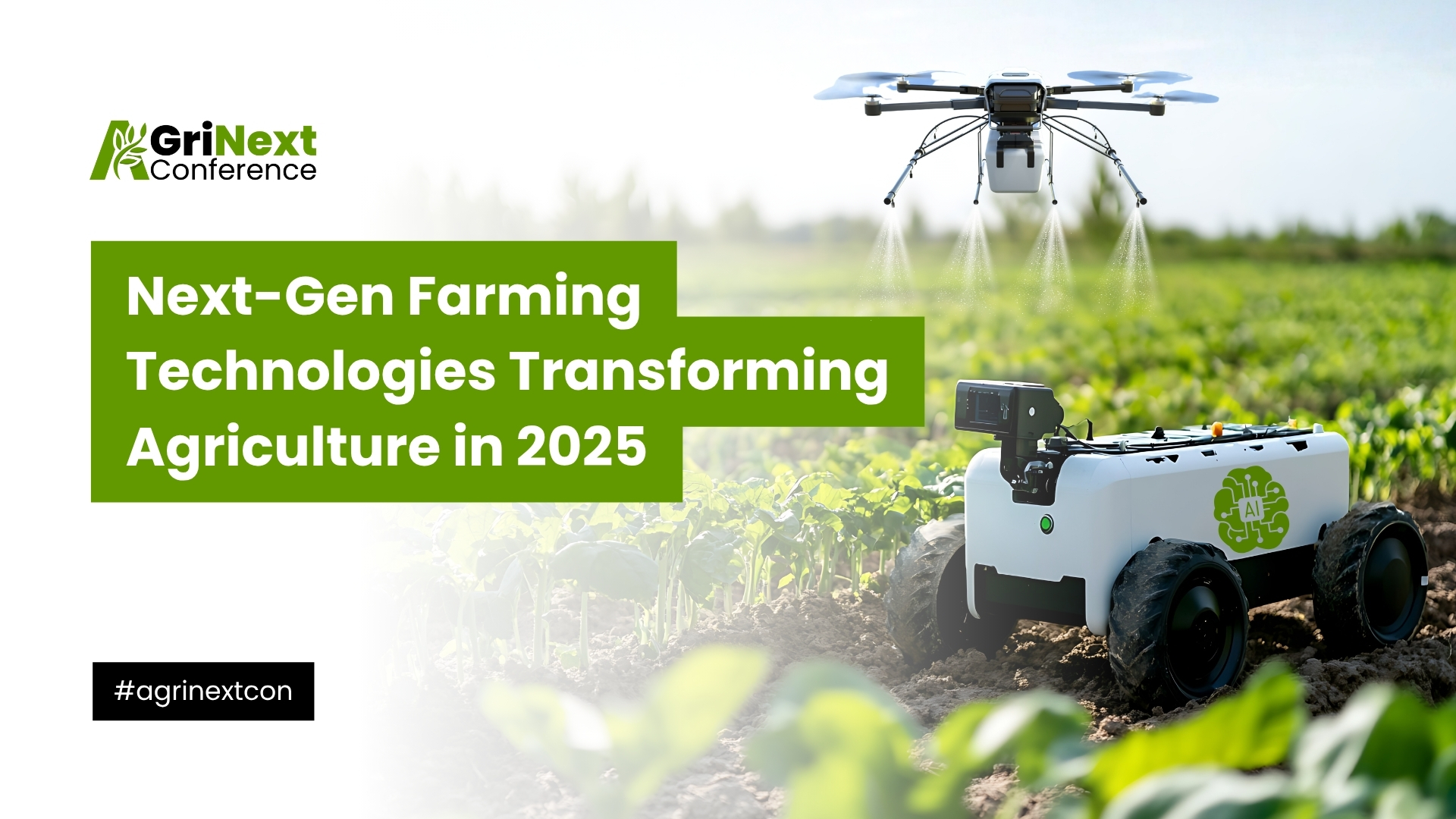
Explore how AI, robotics, biotech, and climate-controlled vertical farming are revolutionizing agriculture in 2025. In 2025, agriculture is undergoing a revolutionary transformation powered by cutting-edge technologies that promise to redefine how food is grown globally. Farmers are embracing smart robotics, biotechnology, AI-driven analytics, and climate-controlled farming to tackle the challenges of climate change and a growing population.
These next-generation innovations enable precision, efficiency, and sustainability like never before—ensuring higher crop yields with fewer resources and reducing environmental impact. This blog explores the breakthrough technologies shaping modern farming and highlights the role of AgriNext 2025 in Dubai as a global hub for advancing smart and sustainable agriculture solutions.
1. Smart Robotics and Automation
Farming robots are now capable of performing complex agricultural tasks that once required extensive human labor. From precision planting to automated harvesting, these systems combine AI, computer vision, and machine learning to optimize every step of the growing process.
Robotics directly contributes to reducing labor shortages, minimizing waste, and boosting productivity. They also integrate seamlessly with other digital systems, allowing real-time adjustments to crop health and field conditions.
Example applications:
Autonomous tractors: GPS-guided tractors can plow, seed, and fertilize fields without human intervention, improving accuracy and cutting fuel costs.
Fruit-picking robots: AI-enabled harvesters can detect ripeness, handle delicate crops gently, and work continuously to meet demand surges.
Robotic weed control: Laser and camera-equipped robots identify and destroy weeds without harming crops, reducing pesticide dependence.
Automated transplanting: Robots now perform transplanting operations with precision, ensuring uniform plant spacing and growth.
As automation scales across the industry, it’s helping farmers produce more food using fewer inputs—setting the foundation for sustainable, data-driven agriculture.
2. Biotechnology and Genetic Innovation
The convergence of biotechnology and agriculture is revolutionizing how crops and livestock are developed. Modern tools like CRISPR and synthetic biology enable scientists to enhance plant resilience, nutrient content, and adaptability to harsh climates. This innovation not only improves food quality but also contributes to global sustainability goals.
Key advancements:
Gene editing: CRISPR technology enables targeted modifications to improve drought tolerance, pest resistance, and shelf life.
Biofertilizers and biostimulants: These eco-friendly alternatives support soil health while reducing reliance on chemical inputs.
Synthetic seeds and tissue culture: Automated propagation methods help achieve uniform plant growth on a large scale.
Disease-resistant livestock: Genetic screening and molecular tools are improving animal health and productivity.
According to market research, the agricultural biotechnology sector is growing at nearly 9% annually, driven by demand for resilient and sustainable crops. When combined with AI analytics, biotech can predict the best genetic traits suited for specific environments — a true leap toward precision breeding.
3. AI, IoT, and Predictive Analytics
Artificial intelligence and the Internet of Things (IoT) are becoming the nerve center of modern farming operations. Sensors, drones, and satellites continuously collect field data — from soil moisture to plant health — which AI systems analyze to recommend real-time actions.
Example applications:
Precision irrigation: AI systems use soil and weather data to regulate water use, preventing waste and improving yields.
Crop disease prediction: Machine learning models identify early signs of disease before visible symptoms appear.
Drone monitoring: Drones equipped with multispectral cameras assess crop health, nutrient levels, and growth rates.
Supply chain optimization: AI-driven analytics streamline logistics from farm to market, reducing post-harvest losses.
This integration of smart devices and analytics allows farmers to move from reactive to proactive decision-making, ensuring sustainability and profitability even under unpredictable conditions.
4. Vertical and Climate-Controlled Farming
Urban agriculture and controlled-environment systems are redefining where and how we grow food. In 2025, vertical farms powered by AI climate control and hydroponic or aeroponic systems are making local, pesticide-free produce accessible even in desert regions and dense cities.
Emerging innovations:
AI-driven microclimate control: Systems automatically adjust light, temperature, and humidity for each crop.
Modular container farms: Portable, stackable units make it possible to grow food year-round anywhere.
Energy-efficient LEDs: Tunable lighting mimics natural sunlight, enhancing growth cycles while conserving energy.
Circular resource use: Vertical farms recycle water and nutrients, cutting waste by up to 90%.
This technology not only reduces the environmental footprint but also provides a solution to global food supply chain challenges.
Conclusion: A Smart, Sustainable Future for Food
As agriculture continues its digital evolution, the convergence of robotics, biotechnology, AI, and controlled-environment farming is setting the stage for a more resilient and sustainable future. These innovations enable farmers to grow smarter, not harder—reducing resource use while increasing yields and quality.
The future of farming isn’t just about producing more food—it’s about producing better, safer, and more sustainable food for everyone.
At the forefront of these innovations is AgriNext 2025, a premier global event uniting leaders, startups, and researchers to shape the future of smart and sustainable agriculture. Scheduled to take place in Dubai, the conference will highlight cutting-edge technologies such as AI-driven crop management, vertical farming, agri-biotech, and climate-smart automation.
With its focus on fostering collaboration between technology providers, policymakers, and farmers, AgriNext 2025 will serve as a catalyst for advancing next-gen farming solutions that promote productivity, efficiency, and environmental stewardship across the global agri ecosystem.
References
Forbes-FoodTech 2025: The Top Breakthrough Technologies & Investment Outlook
Scribd: Top 5 AgTech Trends in 2025
Signup For AgriNext Conference Newsletter




 Reach us on WhatsApp