
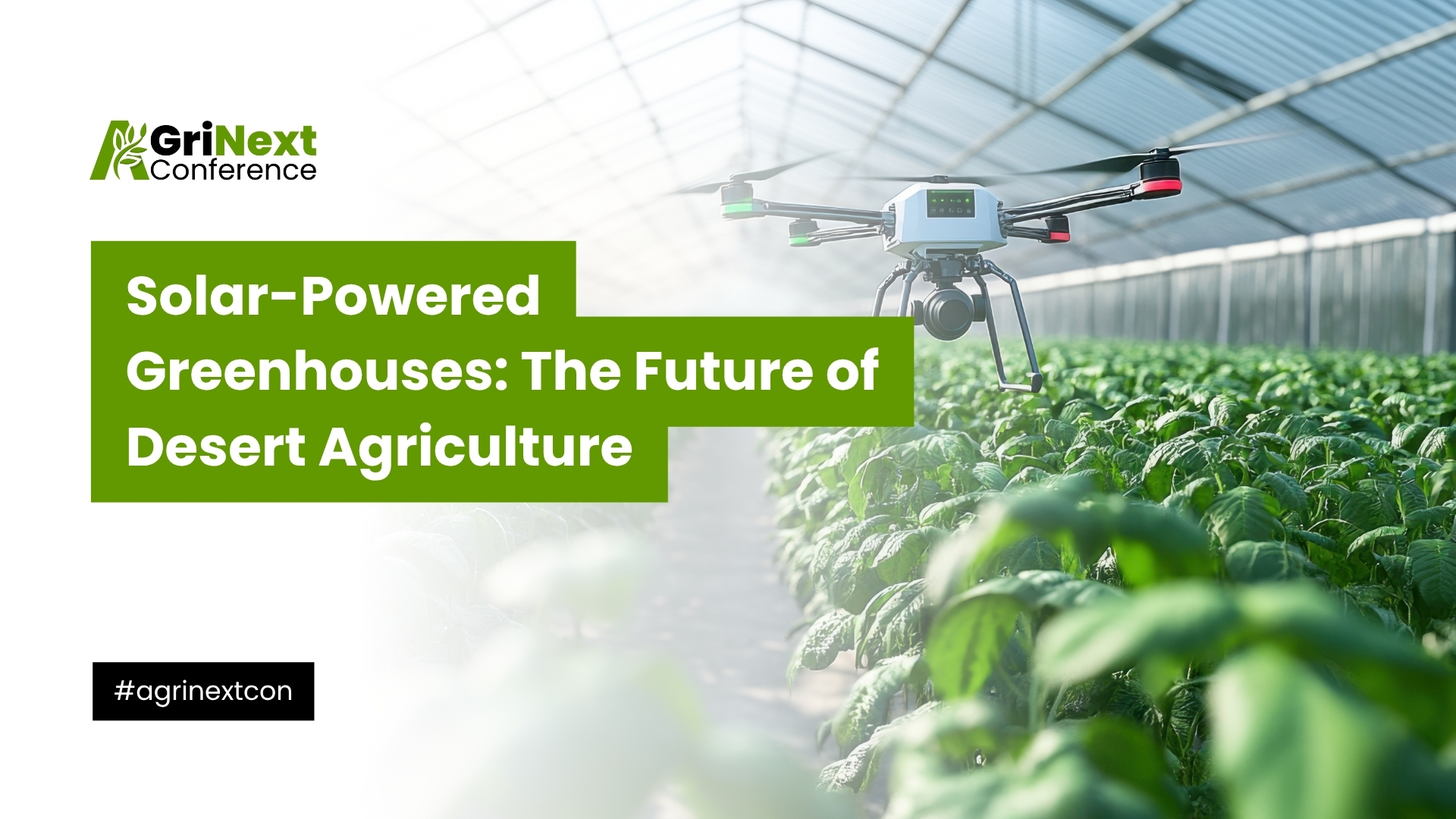
Discover how solar-powered greenhouses are transforming desert agriculture through renewable energy, AI-driven efficiency, and sustainable water use.
As climate change and desertification intensify across the globe, solar-powered greenhouses are emerging as a promising solution for sustainable food production in arid regions. By integrating renewable energy with advanced climate control, these systems enable year-round cultivation even in the harshest desert environments.
Revolutionizing Food Production
Solar-powered greenhouses harness energy from the sun to power essential operations such as cooling, irrigation, and desalination, making farming feasible in water-scarce zones. Unlike conventional systems that rely heavily on grid power or fossil fuels, these facilities operate independently, cutting carbon emissions and operational costs.
Through solar desalination, seawater or brackish water is converted into freshwater for irrigation. Combined with hydroponic or aquaponic systems, this process reduces water consumption by up to 90%—a critical achievement for desert ecosystems striving for sustainability.
Pioneering Projects Around the World
Sundrop Farms (Australia):Located in Port Augusta, this breakthrough project uses concentrated solar power and seawater desalination to produce tomatoes entirely off-grid. Its system generates renewable electricity, freshwater, and controlled climate conditions for over 20 hectares of crops—all powered by the sun.
The Sahara Forest Project (Jordan and Tunisia): Integrating solar energy, saltwater-cooled greenhouses, and sustainable cultivation, this initiative revives barren desert areas. It grows crops such as cucumbers and herbs while aiding desert reforestation, reducing soil erosion, and sequestering carbon.
ICARDA’s ACDC Hybrid Solar Greenhouse(UAE): Setting a benchmark for desert agriculture, this system combines solar-powered cooling with precision irrigation technology. It achieves up to 95% lower energy use and 80% reduced water consumption compared to traditional greenhouses. As part of ICARDA’s Integrated Desert Farming Program, it showcases how renewable-powered greenhouses can make arid agriculture both profitable and eco-efficient.
Key Innovations Driving Growth
AI and IoT Integration: Smart sensors and AI-driven climate control enable real-time adjustments to temperature, humidity, and irrigation. UAE trials have shown up to 40% less water waste through data-guided hydroponic management.
Vertical Desert Farming: Stacked hydroponic systems maximize limited space, boosting yields per square meter while operating on solar energy.
Green Hydrogen Synergy: Some desert farms, like those in Namibia, are coupling solar farming with hydrogen production to create carbon-neutral energy ecosystems .
Sustainable Design Features:Advanced glazing, natural ventilation, and root-zone cooling are optimizing greenhouse performance under extreme heat .
Benefits and Environmental Impact
Solar-powered greenhouses ensure continuous crop production regardless of temperature or rainfall variability. They promote local food security, reducing imports and enhancing regional resilience. Powered by renewable energy, these systems minimize carbon footprints while contributing to desert reforestation and soil restoration.
Challenges Ahead
Despite their potential, these systems face barriers such as high upfront investment, complex maintenance, and the need for skilled technical teams. However, declining solar costs, modular designs, and AI automation are rapidly lowering these barriers. Governments across the Middle East and North Africa now recognize solar-powered farming as a priority for long-term food security and climate adaptation.
AgriNext Awards & Conference 2025
At AgriNext 2025, global innovators and policymakers will showcase how renewable energy and digital technologies are redefining desert agriculture. Attendees will explore pilot projects from the UAE, Saudi Arabia, and Jordan demonstrating how solar-powered greenhouses are turning deserts into hubs of sustainable food production.
Conclusion
Solar-powered greenhouses embody the future of desert agriculture. By merging solar energy, smart technologies, and ecological design, they redefine what’s possible for food systems in arid regions. The desert, once seen as barren, is fast becoming the next frontier for global food security.
Signup For AgriNext Conference Newsletter




 Reach us on WhatsApp