
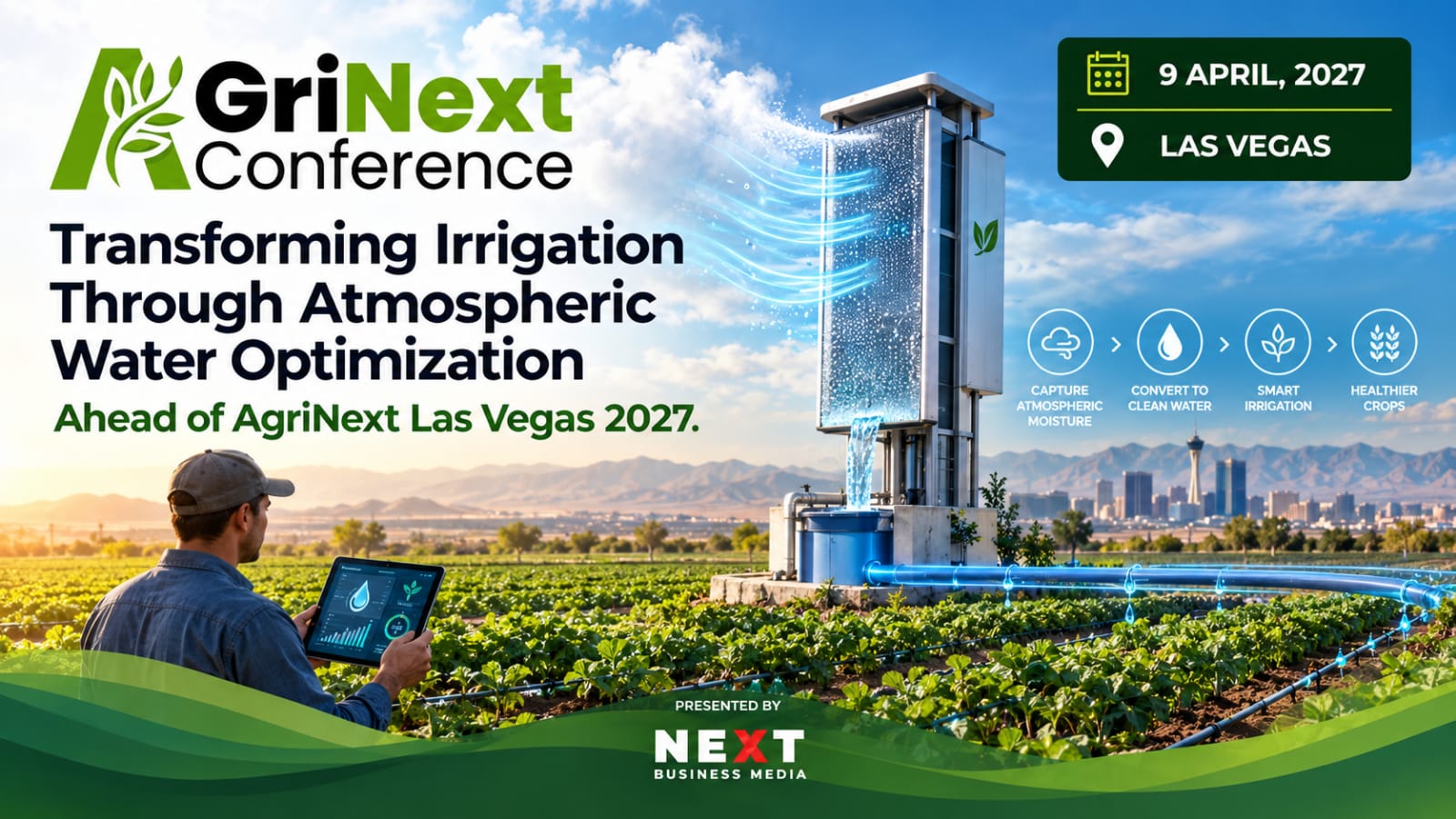
Water scarcity is reshaping agriculture in arid and semi-arid regions, where erratic rainfall and declining groundwater reserves threaten yields and farm viability. Atmospheric water optimization—harvesting moisture from air and coupling it with smart irrigation—offers a decentralized, climate-resilient supplement to conventional water sources. Recent advances in materials, system design, and low-energy desorption are moving the technology from laboratory demonstrations toward practical field applications.
How atmospheric water harvesting works for farms
Atmospheric water harvesting (AWH) systems pull water vapor from ambient air using either condensation, which cools air below its dew point, or adsorption–desorption cycles, which capture moisture on sorbent materials such as metal–organic frameworks and hydrogels before releasing it with heat. Newer approaches integrate solar photothermal heating and intelligent controls to reduce energy use and stabilize output across changing humidity conditions.
When paired with drip or micro-sprinkler irrigation, AWH can provide a localized water source that reduces dependence on distant canals or groundwater. Automation layers—soil-moisture sensors, weather forecasts, and rule-based controllers—help match small, frequent water doses to crop demand, improving water-use efficiency and reducing stress during dry periods.
Why this matters now for irrigated agriculture
Three trends make atmospheric water optimization increasingly relevant for farm operators. First, water risk is intensifying across many growing regions, encouraging growers to diversify water supplies. Second, research is improving the efficiency of atmospheric water extraction through better sorbents, solar-assisted systems, and integrated controls. Third, modularity allows smaller systems to support high-value crops, nurseries, and protected cultivation without requiring major water infrastructure.
Field and experimental evidence supports the potential agronomic case. A water harvesting and soil-moisture management system integrating atmospheric water harvesting, rainwater harvesting, and automated controls reported 82.5% water collection efficiency, approximately 0.95 kWh/day energy consumption, a 30–50% reduction in water cost compared with selected conventional sources, and a 16.5% yield improvement under its test conditions. Results vary significantly with climate, humidity, technology, and crop requirements, so such figures should be treated as site-specific rather than universal benchmarks.
Design choices that determine success
Not all AWH approaches fit all farms. Condensation-based generators generally perform better where humidity and temperatures support efficient cooling, while adsorptive systems can operate in drier environments when paired with efficient low-temperature desorption and suitable sorbents. Energy availability is critical, making solar-thermal or PV-assisted designs particularly relevant for remote agricultural locations.
System integration—storage tanks, filtration, pressure regulation, and irrigation controls—can be as important as the core harvester. A practical deployment framework starts with a water budget based on crop evapotranspiration, soil type, and growth stage. AWH can then be sized to cover a defined share of demand while conventional or harvested rainwater supplies provide the remaining requirement.
Pilots should track three metrics: liters produced per day across seasons, energy consumed per liter, and crop yield or quality response against a control plot.
Atmospheric water harvesting in Las Vegas
Las Vegas is emerging as a testing ground for atmospheric water harvesting under extreme dry conditions. Researchers at the University of Nevada, Las Vegas (UNLV) have developed a solar-compatible atmospheric water harvesting approach designed specifically for low-humidity environments. Outdoor testing in Las Vegas demonstrated that the system can continue capturing atmospheric moisture at relative humidity levels as low as 10%. Under Las Vegas conditions, the researchers estimate that a one-square-meter system could produce about one gallon of water per day, with substantially higher output possible in more humid environments.
The technology has also moved toward commercialization through WAVR Technologies, a UNLV spinout focused on producing atmospherically sourced water for water-stressed regions. The company has identified irrigation among its intended applications, alongside other high-volume uses such as cooling.
For agriculture, the Las Vegas work demonstrates the technical potential of generating a localized supplemental water source in an exceptionally dry climate. It does not yet establish commercial farm-scale irrigation performance, but it provides a relevant foundation for testing AWH alongside drip irrigation, soil-moisture monitoring, and solar power in arid agricultural systems.
From pilot projects to farm-scale adoption
The next step is moving from laboratory and small-scale demonstrations to farm-level pilots that measure performance under real operating conditions. For arid-region horticulture, a solar-powered AWH system could be combined with a buffer tank, drip network, and soil-moisture sensors to provide small, targeted irrigation doses during critical growth stages.
Rather than sizing the system to meet total crop demand, growers can initially use AWH to offset a defined portion of groundwater or other conventional supplies. Over multiple seasons, measurements of water production, energy consumption, crop response, and operating costs can determine whether the system can be economically expanded across individual farms or cooperatives.
AgriNext Awards and Conference Las Vegas
The AgriNext Awards & Conference 2027 will take place on 9 April 2027 at the JW Marriott Las Vegas Resort & Spa in Las Vegas, USA, bringing together global leaders, innovators, investors, policymakers, researchers, and agribusiness professionals to explore the future of sustainable agriculture and AgriTech. For attendees evaluating resilient water strategies, atmospheric water optimization offers an emerging pathway to diversify water supplies and strengthen irrigation resilience in water-constrained regions.