
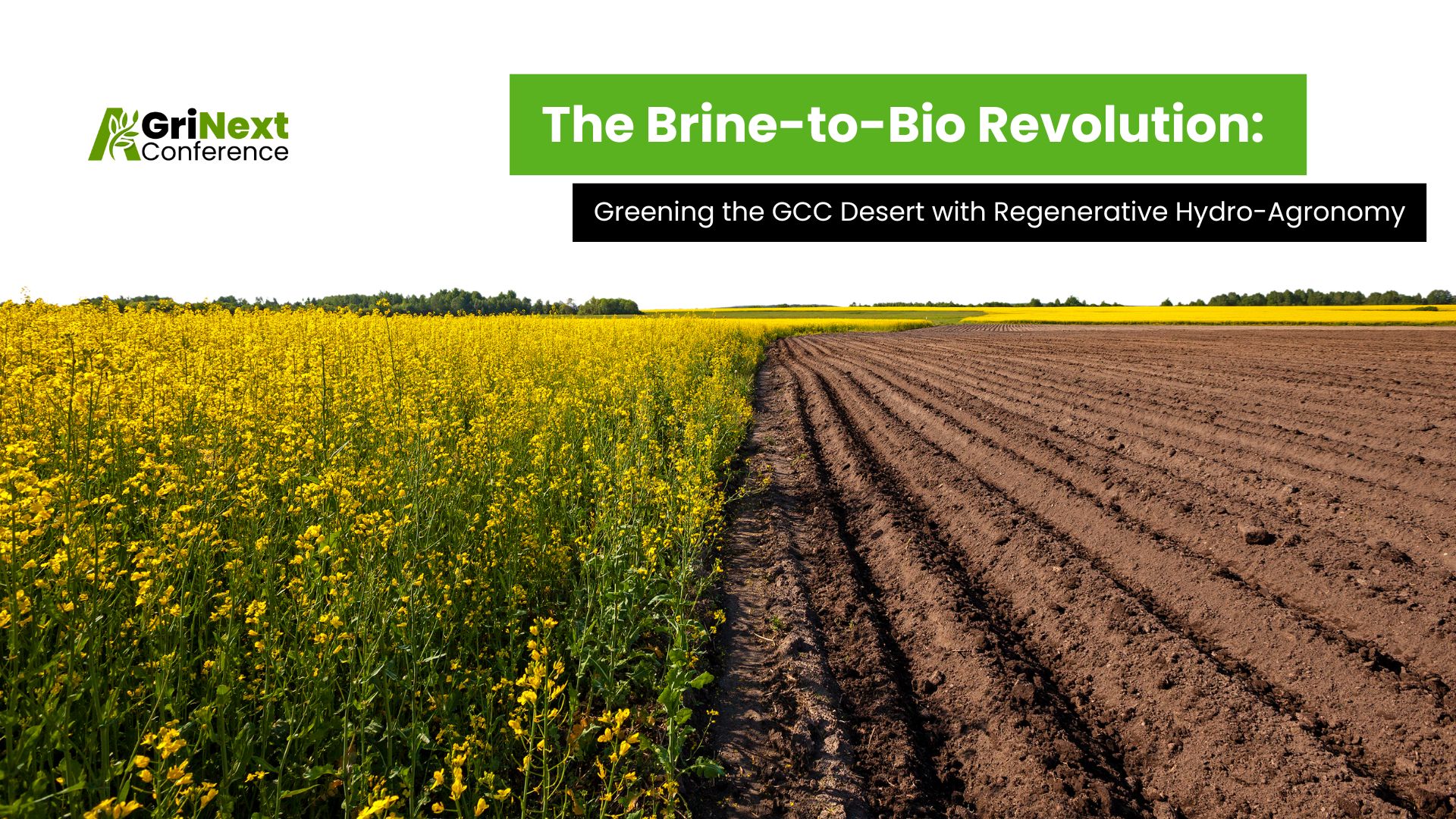
The Gulf Cooperation Council (GCC) region faces a defining agricultural paradox. To thrive in one of the world’s most arid climates, the UAE and its neighbors rely heavily on desalination. Yet this process generates large volumes of highly saline brine that are often discharged back into the sea, creating environmental concerns for coastal ecosystems. At the same time, the region imports a significant share of its animal feed, making food systems vulnerable to global supply disruptions.
At the upcoming AgriNext Awards & Conference Dubai, an emerging concept is drawing attention: Regenerative Hydro-Agronomy. By combining halophytic (salt-tolerant) crops with managed livestock grazing, this approach seeks to transform saline water resources and marginal desert land into productive agricultural ecosystems.
The Architecture of a Circular Ecosystem
Regenerative Hydro-Agronomy is built around resource efficiency. Rather than viewing desalination brine solely as a waste product, saline water can be utilized to cultivate halophytes such as Salicornia bigelovii (sea asparagus) and other salt-tolerant forage crops. These plants thrive under conditions that conventional crops cannot tolerate, creating productive use for otherwise challenging water resources.
The next step involves integrating livestock through managed rotational grazing. Sheep and goats graze the halophytic forage in controlled patterns, helping distribute nutrients through manure and urine while stimulating biological activity in the soil. Over time, organic matter accumulation can improve soil structure, enhance moisture retention, and support more resilient desert farming systems.
While this integrated model is still evolving, it offers a compelling vision for turning underutilized saline resources into productive agricultural assets.
Real-World Foundations
This concept builds on research and projects already underway.
The ICBA Model
The International Center for Biosaline Agriculture (ICBA) in Dubai has conducted extensive research on cultivating Salicornia and other salt-tolerant crops using saline and reject-brine water sources. These efforts demonstrate the potential of biosaline agriculture to produce forage, food, and bio-based products in harsh desert environments.
Global Experience
In Mexico’s Sonora Desert, seawater-irrigated Salicornia projects have demonstrated the crop’s potential as an alternative forage source for livestock. These initiatives highlight how saline agriculture can support productive farming in regions where freshwater resources are limited.
By combining these proven cultivation methods with regenerative grazing practices, innovators are exploring pathways toward more restorative and circular agricultural systems.
Why AgriNext Dubai Is the Ideal Platform
As a leading gathering for agricultural innovation, AgriNext Dubai provides a valuable platform for advancing concepts such as Regenerative Hydro-Agronomy.
Attracting Investment
The event connects agricultural innovators with investors, policymakers, and industry leaders interested in strengthening regional food security and climate resilience.
Building Cross-Sector Partnerships
Successful saline agriculture projects require collaboration among desalination operators, technology providers, researchers, and agricultural developers. AgriNext helps bring these stakeholders together.
Supporting Sustainability Goals
By encouraging productive use of saline resources and promoting soil-building agricultural practices, regenerative hydro-agronomy aligns with broader sustainability and climate objectives across the GCC.
A New Vision for GCC Agriculture
Regenerative Hydro-Agronomy offers a promising vision for the future of agriculture in arid regions. By combining biosaline farming, innovative water management, and regenerative grazing practices, it seeks to address two major regional challenges—water scarcity and land degradation. As research and pilot projects continue to evolve, this approach may help create more resilient, locally driven food systems across the GCC.
Signup For AgriNext Conference Newsletter




 Reach us on WhatsApp