
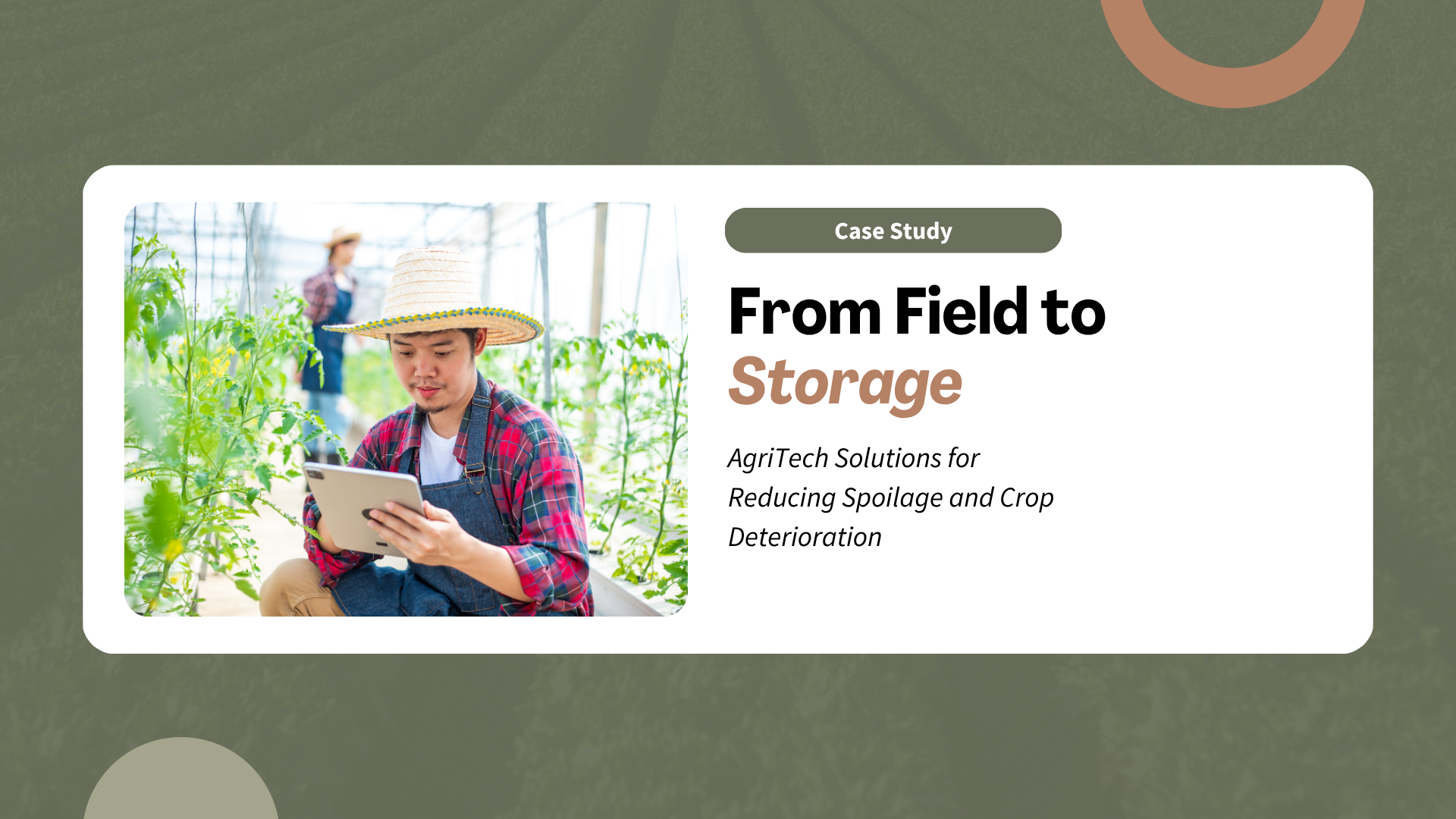
Every year, a significant portion of the world’s food supply is lost between harvest and consumption, representing missed economic opportunities and contributing to food insecurity. Advances in agricultural technology are transforming how crops are preserved from the field to storage, reducing spoilage and crop deterioration.
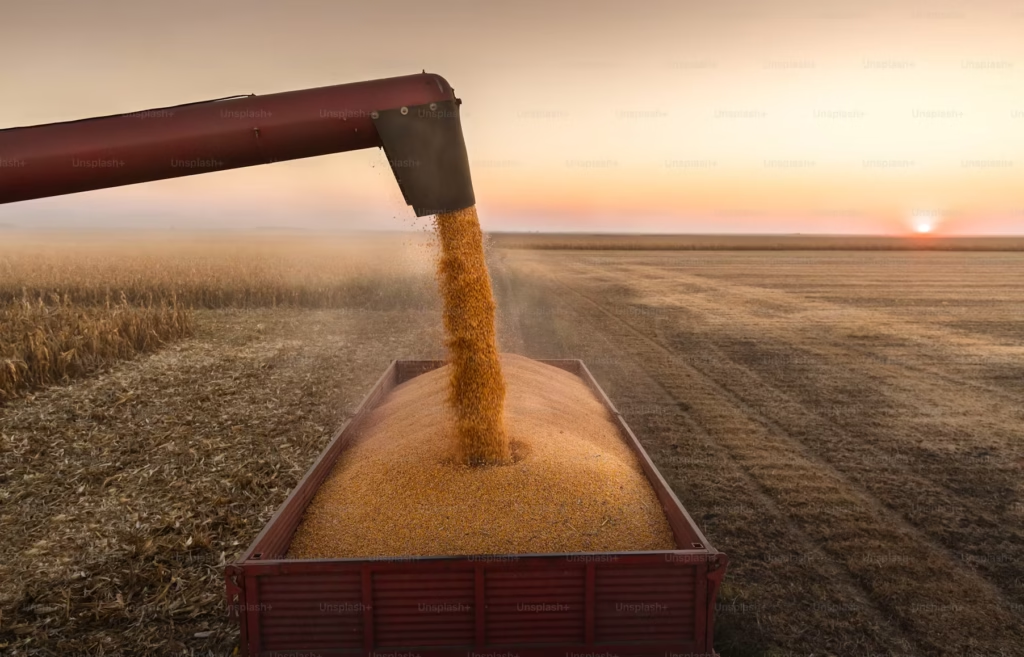
Image Source: https://unsplash.com/photos/grain-auger-of-combine-pouring-corn-into-tractor-
trailer-LSedGoQpONE
The Critical Challenge of Post-Harvest Loss
Post-harvest loss refers to the reduction in both the quantity and quality of agricultural products after harvesting and before they reach consumers. Losses can occur during handling, processing, storage, transportation and distribution. In many regions, inadequate infrastructure and limited access to modern preservation technologies further increase the risk of spoilage. It’s estimated that up to 50% of vegetable and fruit loss is due to inadequate storage facilities, storage outside optimal conditions and poor planning.
The impact of food waste extends beyond the direct financial costs to producers. Food losses put pressure on global food systems, leading to food insecurity. Food that is lost during the supply chain represents wasted land, water, labor and energy that could have been used to feed the world’s growing global population.
The Key Technologies Transforming Crop Preservation
Modern AgriTech innovations are providing producers with unprecedented visibility and control over crop conditions after harvest. They can combine data collection, automation and predictive intelligence to help prevent spoilage before it becomes irreversible.
Real-Time Monitoring with IoT Sensors
Internet of Things (IoT) technology has become a cornerstone of modern post-harvest management. There are connected sensors installed in storage facilities, grain silos, cold rooms and transportation containers that continuously monitor environmental conditions, such as temperature, humidity, airflow and gas concentrations.
Unlike traditional manual inspections that provide only occasional snapshots of storage conditions, IoT systems deliver a continuous stream of real-time data. When environmental conditions move outside optimal thresholds, automated alerts notify operators immediately, enabling rapid intervention.
For example, grains require low-moisture environments to prevent spoilage, as moisture levels above 12% support mold growth and chemical degradation. IoT-powered systems can detect issues such as excessive moisture, temperature spikes, or inadequate ventilation long before visible signs of spoilage appear.
Predictive Analytics With AI and Machine Learning
The value of monitoring technology increases significantly when paired with artificial intelligence (AI) and machine learning (ML). These advanced analytical systems process large volumes of data collected from sensors and identify patterns that would be difficult for humans to detect.
AI-driven platforms can forecast spoilage risks, estimate remaining shelf life and recommend optimal storage conditions based on historical performance and real-time environmental factors.
The growing role of AI in agriculture improves decision-making throughout the agricultural supply chain. It enables proactive rather than reactive management. Predictive analytics also helps reduce losses while improving operational efficiency.
Advanced Controlled-Atmosphere Storage Solutions
Storage technology has significantly evolved beyond conventional warehouses and refrigeration systems. Controlled-Atmosphere (CA) and hermetic storage solutions are designed to create environments that naturally slow crop deterioration.
CA systems regulate oxygen and carbon dioxide concentrations to reduce respiration rates in fruits, vegetables and other perishable products. Lower oxygen levels help slow ripening processes and inhibit microbial growth, extending shelf life while preserving quality. Meanwhile, hermetic storage systems use airtight containers or bags to create stable environments that protect crops from moisture, pests and contamination.
The Strategic Benefits of Modern Post-Harvest Technology
The impact of post-harvest technology extends far beyond reducing spoilage. These innovations deliver benefits across the agricultural value chain.
Strengthening Food Security and Market Value
Reducing spoilage directly increases the volume of food available to consumers, considering that nearly half of global food production is lost to external and environmental factors. As more harvested products successfully move through the supply chain, food availability improves without requiring additional land or production.
Maintaining quality is equally important. Crops that retain their appearance, freshness and nutritional integrity can command higher prices and gain access to premium markets. This creates opportunities for producers to improve profitability while meeting increasingly demanding buyer requirements.
Reducing the Environmental Footprint of Agriculture
Food waste has a significant environmental impact and accounts for approximately 8% of total global greenhouse gas emissions. When crops spoil before consumption, the resources used to produce them, including water, fertilizer, fuel, labor and land, are effectively wasted as well.
Reducing post-harvest losses can have a meaningful impact on climate change. In preserving more of what is already produced, modern post-harvest technologies help reduce pressure on natural resources while supporting broader sustainability objectives across the food system.
Boosting Economic Returns for Producers
The financial case for investing in post-harvest technology is compelling for producers. Every percentage of spoilage prevented translates into greater marketable yield and higher revenue potential.
Advanced storage systems enable producers to maintain product quality for longer periods, which increases flexibility in marketing and distribution decisions. Rather than being forced to sell immediately after harvest, producers can store products strategically and respond to favorable market conditions.
Methods focused on preserving nutritional value and product quality also help maintain commercial appeal over time. They can enable producers to maximize returns from existing harvests while reducing losses associated with degradation and waste.
The Future of Post-Harvest Management
As agricultural production continues to expand, reducing post-harvest losses will become as important as increasing yields in the field. IoT monitoring systems, AI-powered analytics and controlled-atmosphere storage are transforming how crops are preserved throughout the post-harvest journey.
Continued advances in AgriTech will further enhance the ability of farmers and agricultural businesses to protect crop quality from field to storage. As adoption grows, post-harvest technology will play an increasingly central role in building a more sustainable, efficient and resilient global food system.
The impact of food waste extends beyond the direct financial costs to producers. Food losses
put pressure on global food systems, leading to food insecurity. Food that is lost during the supply chain represents wasted land, water, labor and energy that could have been used to feed the world’s growing global population.
The Key Technologies Transforming Crop Preservation
Modern AgriTech innovations are providing producers with unprecedented visibility and control over crop conditions after harvest. They can combine data collection, automation and predictive intelligence to help prevent spoilage before it becomes irreversible.
Real-Time Monitoring with IoT Sensors
Internet of Things (IoT) technology has become a cornerstone of modern post-harvest management. There are connected sensors installed in storage facilities, grain silos, cold rooms and transportation containers that continuously monitor environmental conditions, such as temperature, humidity, airflow and gas concentrations.
Unlike traditional manual inspections that provide only occasional snapshots of storage conditions, IoT systems deliver a continuous stream of real-time data. When environmental conditions move outside optimal thresholds, automated alerts notify operators immediately, enabling rapid intervention.
For example, grains require low-moisture environments to prevent spoilage, as moisture levels
above 12% support mold growth and chemical degradation. IoT-powered systems can detect
issues such as excessive moisture, temperature spikes, or inadequate ventilation long before
visible signs of spoilage appear.
Predictive Analytics With AI and Machine Learning
The value of monitoring technology increases significantly when paired with artificial intelligence (AI) and machine learning (ML). These advanced analytical systems process large volumes of data collected from sensors and identify patterns that would be difficult for humans to detect.
AI-driven platforms can forecast spoilage risks, estimate remaining shelf life and recommend optimal storage conditions based on historical performance and real-time environmental factors.
The growing role of AI in agriculture improves decision-making throughout the agricultural supply chain. It enables proactive rather than reactive management. Predictive analytics also helps reduce losses while improving operational efficiency.
Advanced Controlled-Atmosphere Storage Solutions
Storage technology has significantly evolved beyond conventional warehouses and refrigeration systems. Controlled-Atmosphere (CA) and hermetic storage solutions are designed to create environments that naturally slow crop deterioration.
CA systems regulate oxygen and carbon dioxide concentrations to reduce respiration rates in fruits, vegetables and other perishable products. Lower oxygen levels help slow ripening processes and inhibit microbial growth, extending shelf life while preserving quality. Meanwhile, hermetic storage systems use airtight containers or bags to create stable environments that protect crops from moisture, pests and contamination.
The Strategic Benefits of Modern Post-Harvest Technology
The impact of post-harvest technology extends far beyond reducing spoilage. These innovations deliver benefits across the agricultural value chain.
Strengthening Food Security and Market Value
Reducing spoilage directly increases the volume of food available to consumers, considering that nearly half of global food production is lost to external and environmental factors. As more harvested products successfully move through the supply chain, food availability improves without requiring additional land or production.
Maintaining quality is equally important. Crops that retain their appearance, freshness and nutritional integrity can command higher prices and gain access to premium markets. This creates opportunities for producers to improve profitability while meeting increasingly demanding buyer requirements.
Reducing the Environmental Footprint of Agriculture
Food waste has a significant environmental impact and accounts for approximately 8% of total global greenhouse gas emissions. When crops spoil before consumption, the resources used to produce them, including water, fertilizer, fuel, labor and land, are effectively wasted as well.
Reducing post-harvest losses can have a meaningful impact on climate change. In preserving more of what is already produced, modern post-harvest technologies help reduce pressure on natural resources while supporting broader sustainability objectives across the food system.
Boosting Economic Returns for Producers
The financial case for investing in post-harvest technology is compelling for producers. Every percentage of spoilage prevented translates into greater marketable yield and higher revenue potential.
Advanced storage systems enable producers to maintain product quality for longer periods, which increases flexibility in marketing and distribution decisions. Rather than being forced to sell immediately after harvest, producers can store products strategically and respond to favorable market conditions.
Methods focused on preserving nutritional value and product quality also help maintain
commercial appeal over time. They can enable producers to maximize returns from existing
harvests while reducing losses associated with degradation and waste.
The Future of Post-Harvest Management
As agricultural production continues to expand, reducing post-harvest losses will become as important as increasing yields in the field. IoT monitoring systems, AI-powered analytics and controlled-atmosphere storage are transforming how crops are preserved throughout the post-harvest journey.
Continued advances in AgriTech will further enhance the ability of farmers and agricultural businesses to protect crop quality from field to storage. As adoption grows, post-harvest technology will play an increasingly central role in building a more sustainable, efficient and resilient global food system.
Signup For AgriNext Conference Newsletter


 Reach us on WhatsApp