
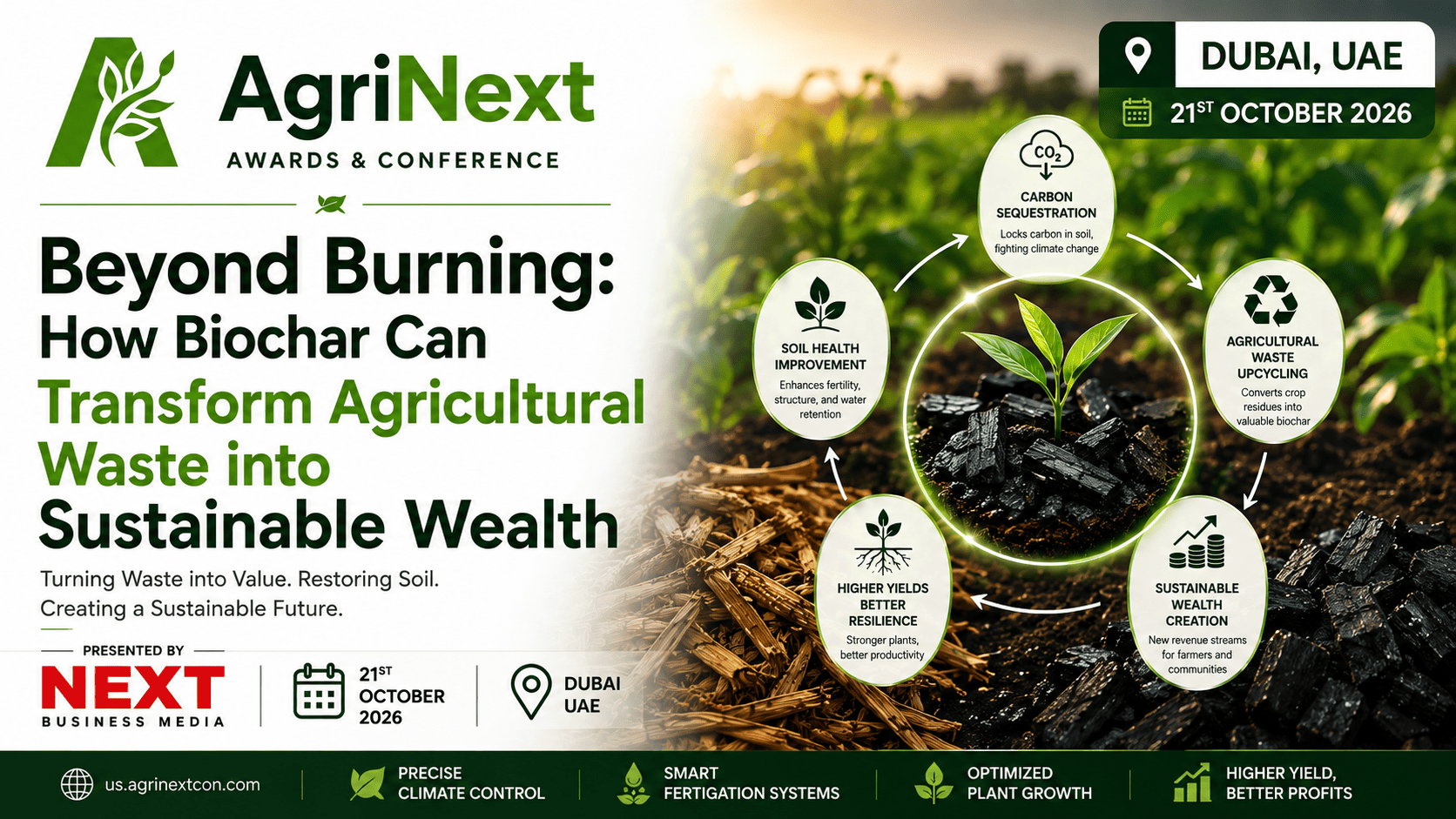
Agricultural waste is often treated as a nuisance: rice straw is burned, coconut husks are discarded, and crop residues are left to decay. Yet these materials represent an untapped resource. Biochar converts agricultural biomass into a stable, carbon-rich material that improves soil health, enhances water retention, stores carbon, and creates new value streams for farmers and rural entrepreneurs.
The Problem: Open‑Field Burning and Lost Value
Across agricultural regions worldwide, open-field burning of crop residues remains a common practice. From rice-growing areas in Asia to maize- and sugarcane-producing regions in Africa and Latin America, millions of tonnes of agricultural waste are burned each year.
This practice contributes to air pollution, greenhouse gas emissions, and the loss of valuable biomass. Despite policy interventions, many farmers lack affordable, practical alternatives for residue management.
A Practical Solution: Turning Waste into Biochar
Rather than treating residues as a disposal problem, they can be processed into biochar by heating biomass in a low‑oxygen environment (pyrolysis). When incorporated into soil, biochar:
•Improves water retention, helping crops during droughts.
•Enhances nutrient availability and supports beneficial soil microbes.
•Reduces the need for chemical fertilizers.
•Locks carbon away for decades or centuries, creating durable climate benefits.
Benefits for Stakeholders
Farmers: Healthier soils, greater resilience to extreme weather, lower input costs, and potential new revenue from selling biochar or associated services.
Governments: A practical pathway to reduce open‑field burning, improve air quality, and meet climate commitments.
Rural economies: Decentralised biochar production can create jobs and value chains for feedstock collection, processing, and sales.
Evidence and Emerging Use Cases
Biochar is moving beyond research into real-world applications.In 2025 the International Biochar Initiative (IBI) and research institutions reported growing adoption in regenerative agriculture and carbon removal projects. Examples include:
Aquaculture Water Treatment:Research in Thailand has explored the use of biochar derived from agricultural residues for aquaculture water treatment. Biochar-amended filtration systems have shown improved micropollutant removal compared with conventional sand filters, demonstrating another high-value application for agricultural waste.
Corporate climate programs: Companies such as Microsoft have supported biochar‑based carbon removal projects, helping scale production and create revenue opportunities for rural communities.
Growing adoption: India, Australia, the U.S., and several European countries have expanded research and pilot projects to convert residues into biochar rather than burning them.
Scaling the Opportunity
Agricultural economies generate vast quantities of crop residues annually. While some biomass is reused as feed, compost, or bioenergy feedstock, substantial volumes are still burned or left to decompose. Expanding decentralised biochar production addresses waste management and creates marketable products: soil amendments, filtration media, and verified carbon removal credits.
Challenges to Scale
Technology and finance: Smallholder adoption requires affordable, robust pyrolysis units and access to working capital or incentives.
Quality and standards: High‑quality biochar and credible carbon credits need standardized production, testing, and verification protocols.
Logistics: Collecting, transporting, and aggregating low‑density residues cost‑effectively is a major operational hurdle.
Addressing these challenges will require coordinated policy incentives, public‑private partnerships, and capacity building for rural entrepreneurs.
From Waste to Wealth
Biochar shows that a single innovation can help solve air pollution, soil degradation, climate change, and rural livelihoods simultaneously. As demand grows for climate‑smart agriculture and durable carbon removal, converting agricultural waste into biochar can become a scalable pathway to sustainable wealth.
AgriNext Awards & Conference will continue to spotlight innovations such as biochar, circular bioeconomy solutions, and climate-smart farming that are reshaping the future of sustainable agriculture.
Signup For AgriNext Conference Newsletter


 Reach us on WhatsApp