
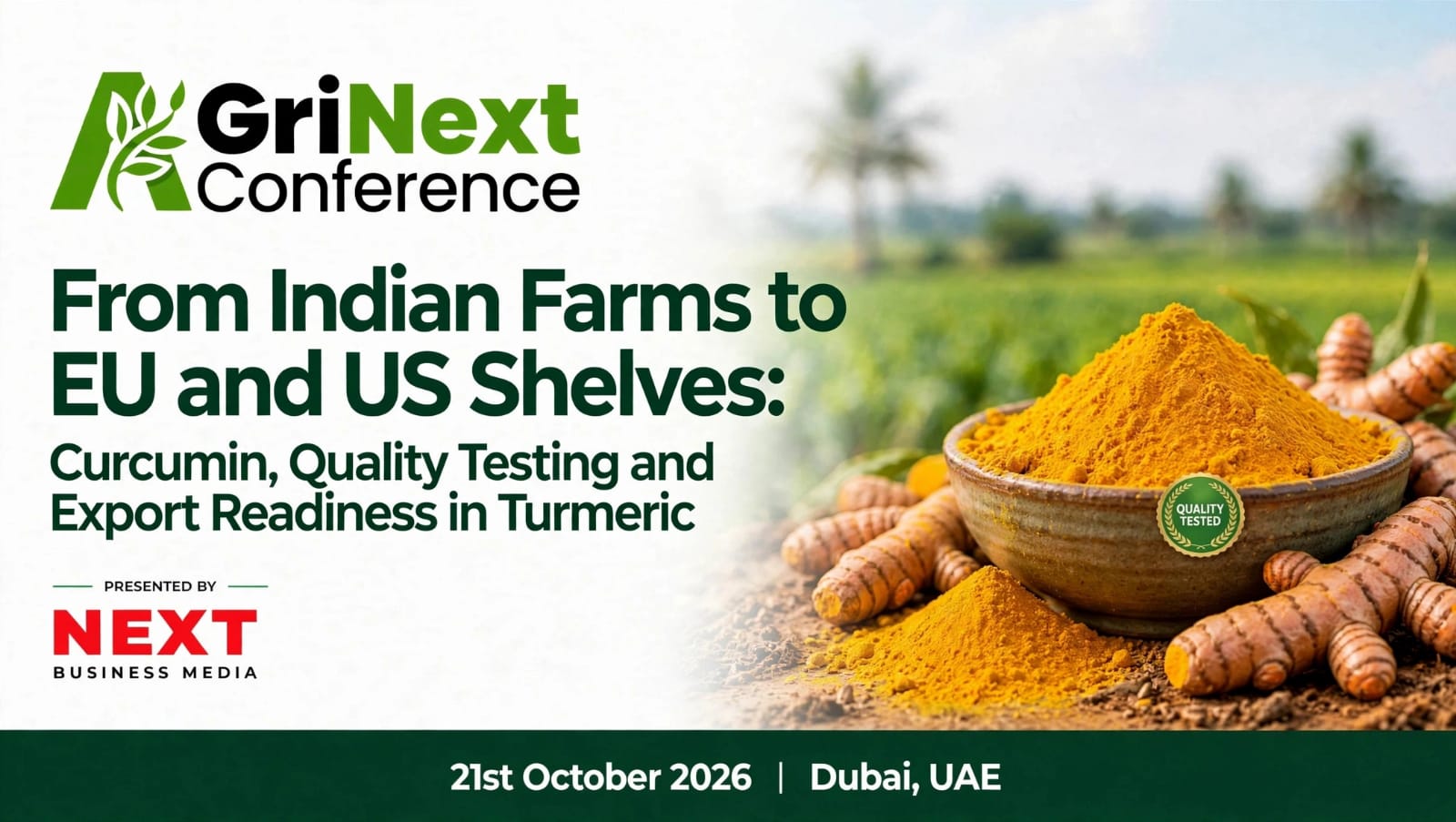
Turmeric is moving beyond its traditional role as a culinary spice. For food manufacturers, nutraceutical companies and ingredient buyers, it is increasingly a quality-led product whose value depends on measurable curcumin content, safety testing and traceable sourcing. For India, this creates an opportunity to turn its strong turmeric production base into greater export value.
Curcumin, the best-known bioactive compound in turmeric, varies with the variety, growing conditions, harvest maturity and processing method. Buyers therefore need verified quality data rather than general product claims. For Indian exporters targeting markets such as the European Union and the United States, quality assurance is an important part of building buyer confidence and maintaining consistent market access.
Curcumin as a Value Marker
Curcumin content can help distinguish standard culinary turmeric from higher-value ingredient-grade products. Food manufacturers may prioritize color, flavor and consistency, while nutraceutical and extract manufacturers may require standardized curcuminoid levels for specific formulations.
Testing helps verify whether a batch meets these specifications. High-performance liquid chromatography (HPLC) is a widely used analytical method for measuring curcumin and other curcuminoids. A reliable Certificate of Analysis (CoA) should identify the sample or batch, test results, analytical methods and laboratory, enabling buyers to assess product quality against agreed specifications.
For Indian producers and processors, the priority is to document quality at the batch level. Verified results provide a stronger basis for commercial claims than broad statements about turmeric's curcumin content.
Testing for Global Market Access
Export readiness requires more than measuring curcumin. Depending on the product, destination market and buyer specifications, testing may cover pesticide residues, heavy metals, microbiological contamination, mycotoxins and adulterants.
Pesticide-residue compliance is particularly important for the European Union, where legally established maximum residue levels apply to imported food products. Non-compliant consignments may face official controls and other enforcement measures. Exporters must check the applicable limits for the relevant product and pesticide rather than rely on a general testing checklist.
Heavy metals, including lead, arsenic, cadmium and mercury, may also require attention under applicable contaminant rules and buyer requirements. Microbiological testing and checks for adulteration can further support product safety and authenticity.
A reliable export-quality system connects these checks across the supply chain. Responsible agricultural input use, controlled post-harvest handling, hygienic processing, appropriate laboratory testing and accurate documentation all contribute to reducing quality risks. Testing should be selected according to the product's intended use and the requirements of the destination market.
Dubai: A Strategic Trade Bridge
Dubai serves as both a vital consumer market and a high-capacity gateway for Indian turmeric. India accounted for approximately 66% of global turmeric export value in 2024, while the UAE was India’s second-largest turmeric export destination in 2024–25, receiving more than 25,000 metric tones. Supported by an established food-trade network, Dubai offers Indian exporters access to buyers across the Gulf and wider regional markets.
Guided by Dubai’s Food Security Strategy, the emirate places strong emphasis on food safety, quality and diversified sourcing.
With Jebel Ali Port serving as a major global maritime hub, Dubai offers the infrastructure to position Indian turmeric as a traceable, quality-assured ingredient for regional and international distribution.
The Export-Readiness Imperative
India's turmeric sector benefits from its production base, varietal diversity and processing capacity. The next stage of export growth will depend on improving quality standards, strengthening processing infrastructure and expanding value-added products.
Investments in quality infrastructure, residue management, adulteration controls, standardized specifications and digital traceability can help producers and exporters meet buyer expectations. Collaboration among farmers, processors, laboratories, exporters and technology providers can make these systems more accessible and effective.
Curcumin content may attract buyers seeking specialized ingredients, but product safety, consistency and traceable origin are essential to sustaining commercial relationships. By connecting farm-level practices with verifiable quality and market-specific compliance, Indian turmeric businesses can strengthen their position in the EU, US and Dubai-linked regional markets.
Join AgriNext Awards and Conference Dubai
AgriNext Dubai brings together agriculture leaders, technology providers, investors and industry professionals to explore agricultural innovation, value addition and stronger market connections. The event provides an opportunity to engage with industry stakeholders working to improve productivity, strengthen supply chains and expand market access.
Join AgriNext Dubai to connect with industry leaders and explore opportunities shaping the future of agriculture.
References
PIB — Government of India turmeric export statistics
US FDA — Improving the Safety of Spices