
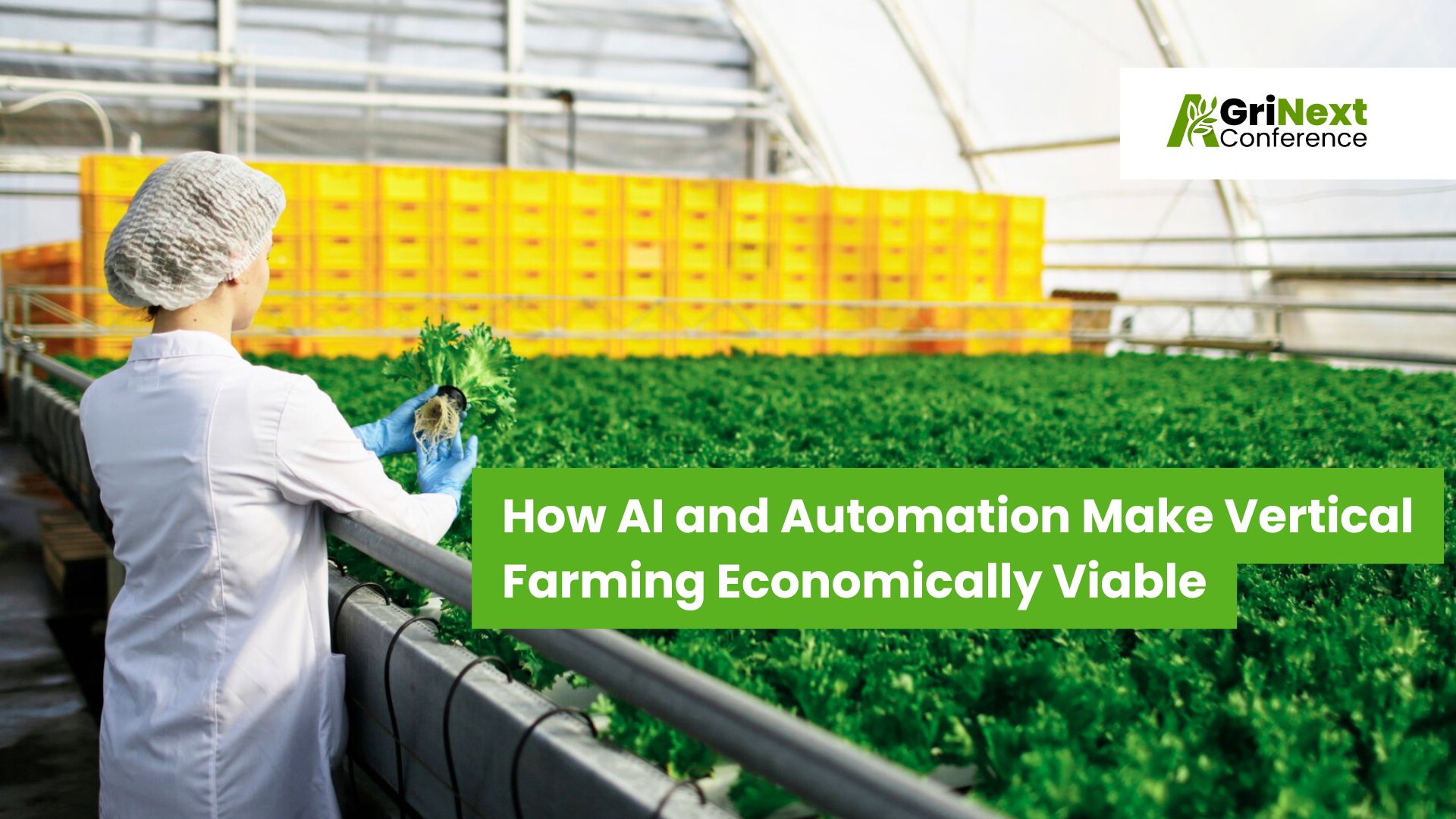
Growing pesticide‑free crops inside urban warehouses once sounded like science fiction. Early vertical farms proved the tech worked—but the business didn’t. Controlled environments demand heavy upfront capital and large, volatile energy bills.
Next‑generation vertical farming (NGVF) is changing that—and it’s exactly what AgriNext Dubai’s themes target: precision farming, AI in agriculture, climate‑smart solutions, and food security. By combining AI, robotics, and smarter energy management, modern facilities are turning indoor agriculture into a viable urban infrastructure asset. Four technology and business levers explain how NGVF is fixing the broken economics of indoor farming.
Smarter Energy Management with AI
Photonic AI uses AI‑driven lighting and climate control to match plant needs and grid conditions in real time. Instead of static white light, next‑gen LEDs dynamically change spectra and intensity by growth stage—maximizing photosynthesis and cutting wasted photons. Facility controllers can integrate with electricity markets and demand‑response programs to shift non‑critical load to off‑peak hours or dim lights during price spikes.
Automation Improves Efficiency
Automation reduces labor spend and biological risk. Early indoor farms required humans for planting, tray movement, inspection, harvesting, and packing—driving up wages and contamination vectors. NGVF uses robotic tray logistics, automated harvesters, and computer‑vision diagnostics that scan millions of plants per hour for stress or disease. This is precision farming in action: higher repeatability, fewer human errors, and consistent throughput. For operators, fewer people on the floor means lower operating costs and fewer catastrophic crop failures.
Expanding into Higher-Value Crops
To scale profitably, NGVF is expanding beyond fast‑turnover lettuce and basil. Improved climate control, better crop selection, and clean growing environments now allow vertical farms to produce dwarf berries, specialty herbs, and plants used in pharmaceutical and cosmetic products. These higher‑value crops command premium prices year‑round and are less exposed to climate shocks—raising revenue per square meter and shortening time to positive cash flow.
Bringing Food Production Closer to Consumers
Locating modular farms next to urban distribution centers eliminates much waste and cost from long cold chains. Urban NGVF can deliver harvest‑fresh produce to retailers within hours, slashing transport damage, extending shelf life, and unlocking price premiums. Near‑zero food miles also reduce CO₂ emissions from distribution—a growing priority for sustainability‑minded buyers across the Gulf region.
Making Vertical Farming Economically Viable
Together, these advances move next-generation vertical farming (NGVF) closer to sustainable profitability. Energy optimization helps reduce operating cost volatility, robotics lower recurring labor expenses, crop diversification increases revenue potential, and urban siting strengthens relationships with retailers and food-service providers through fresher, locally produced crops.
However, commercial success depends on more than technology alone. High capital requirements, urban real estate costs, financing structures, regulatory frameworks, and consumer willingness to pay remain important considerations. To manage these challenges, operators are adopting phased modular expansion, infrastructure-style financing models, on-site energy storage, demand-response programs, and long-term offtake agreements with retailers and food-service partners. Together, these strategies help transform vertical farming from a promising concept into a scalable and financially viable business model.
AgriNext 2026: Advancing the Future of Urban Farming
As next-generation vertical farming moves from pilot projects to commercially viable operations, collaboration across the agricultural ecosystem becomes increasingly important. AgriNext Awards & Conference 2026 will bring together growers, technology providers, investors, policymakers, and sustainability leaders to explore the innovations shaping the future of food production.
Through discussions on AI in agriculture, precision farming, climate-smart solutions, and investment strategies, attendees will gain practical insights into building resilient and profitable farming systems. Real-world case studies, emerging technologies, and industry partnerships will highlight how vertical farming can contribute to food security while creating sustainable business opportunities.
Signup For AgriNext Conference Newsletter


 Reach us on WhatsApp