
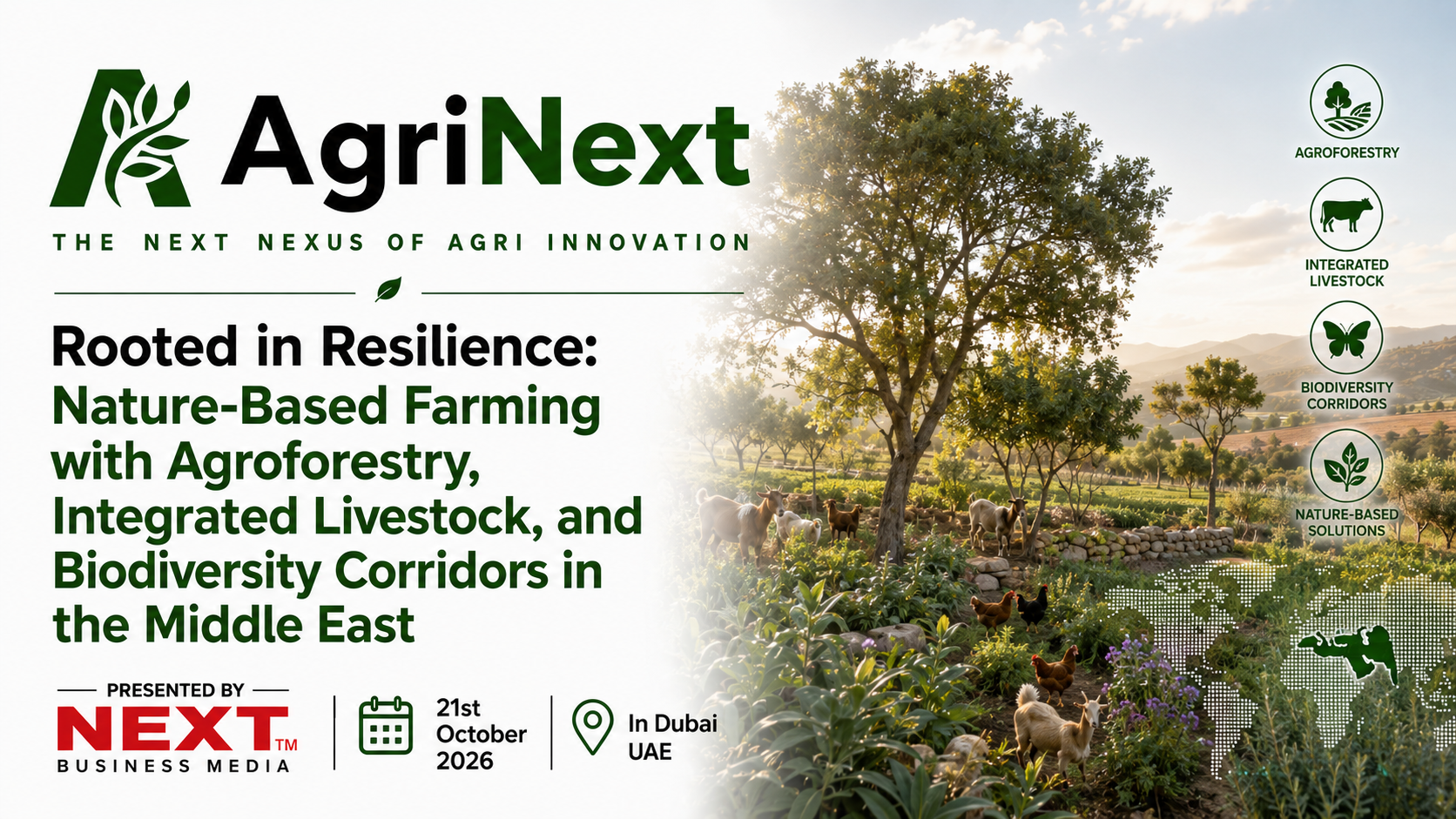
The Middle East is often framed through the lens of water stress, desertification, and climate vulnerability. Yet, across the region, farmers and pastoral communities are quietly proving that nature herself can be a powerful ally in building resilient food systems. Nature‑based solutions(NbS) such as agroforestry, integrated crop–livestock systems, and biodiversity corridors are emerging as practical, scalable strategies to regenerate land, enhance productivity, and protect rural livelihoods.
At its core,nature-based solutions (NbS) means working with ecological processes rather than against them. Instead of relying solely on input‑heavy, linear models of agriculture, these approaches re‑introduce diversity, deepen root systems, and restore cycles of water, nutrients, and biomass. Agroforestry, integrated livestock, and biodiversity corridors are three of the most promising levers in this shift – and they are far from theoretical. They build on centuries of indigenous practice and are now being formalized in contemporary policy and project design across the Middle East and North Africa.
Agroforestry combines trees with crops and sometimes livestock to create multi‑layered, climate‑smart production systems. In water‑stressed environments, well‑chosen trees provide shade, reduce evapotranspiration, stabilize soils, and increase organic matter. They also offer additional products – fruits, fodder, timber, fuelwood – diversifying income streams for farmers. In many Middle Eastern dryland farming systems, agroforestry is increasingly promoted as a nature‑based solution to enhance biodiversity and climate resilience. Tree belts and shelterbelts help protect crops from wind erosion and sand encroachment, while creating habitat for pollinators and beneficial insects.
Integrated livestock systems push the idea further by reconnecting animals with cropping and forestry components. Instead of treating livestock as separate from fields, integrated crop–livestock–forestry models cycle manure back into soils, use managed grazing to control biomass, and create more complex, self‑regulating agroecosystems. Recent research frames these integrated systems as quintessential NbS: they mimic trophic levels and nutrient flows found in natural ecosystems, supporting carbon sequestration, biodiversity conservation, and diversified yields. In drylands, rotational grazing and carefully timed browsing can prevent overgrazing, stimulate plant regrowth, and maintain ground cover – critical for protecting soils from erosion and flash floods.
One of the most compelling examples is the community-managed grazing system known as the Hima system, practiced in parts of Jordan and Lebanon. In Jordan, the system has been revived through pilot projects implemented in partnership with IUCN and local organizations, using regulated rotational grazing to restore degraded rangelands and combat desertification.
Within a few years, vegetation cover and biomass increased markedly, and native shrubs and medicinal plants began to return, demonstrating the ecological and economic value of this traditional approach. By restricting grazing in designated areas to allow natural regeneration, the Hima today embodies a modern nature‑based solution—combining indigenous knowledge with sustainable land management to restore ecosystems, enhance biodiversity, improve soil health, and strengthen the resilience of rural communities.
Biodiversity corridors add another layer to this picture. In fragmented landscapes where fields, roads, and settlements break up habitats, corridors – strips of vegetation, riparian buffers, shelterbelts, or restored mangrove belts – allow species to move, pollinators to travel, and ecosystems to breathe. In coastal and oasis systems of the wider MENA region, restored mangrove forests and riparian buffers along wadis and irrigation canals act as nature-based solutions (NbS) that stabilize shorelines, reduce erosion, and protect communities from storm surges and floods. Inland, wind‑breaks and tree fences help intercept moving sand and maintain microclimates that support both crops and native flora and fauna.
For the Middle East, where climate models project rising temperatures and more frequent extremes, these nature‑based strategies are not optional add‑ons; they are core climate‑adaptation infrastructure. They help farmers capture scarce rainfall, recharge aquifers, reduce pressure on groundwater, and maintain productivity under stress. They also align with national biodiversity and climate commitments, offering relatively low‑cost, locally appropriate pathways to operationalize the interface between conservation and climate action.
However, normalizing nature-based solutions (NbS) in the region requires more systematic documentation, supportive policy, and finance. Regional assessments show that many traditional practices – from reed and tree fences to local water‑harvesting systems – are under‑recognized and rarely integrated into formal projects or investments.
As climate resilience becomes a strategic priority across the Middle East, these approaches are expected to feature prominently in discussions at AgriNext Awards & Conference Dubai 2026, where policymakers, researchers, agritech innovators, and industry leaders will explore practical solutions for sustainable agriculture, ecosystem restoration, and climate-smart farming. By connecting innovation with proven land stewardship practices, the event aims to accelerate the adoption of scalable nature-based solutions across the region.
Signup For AgriNext Conference Newsletter


 Reach us on WhatsApp