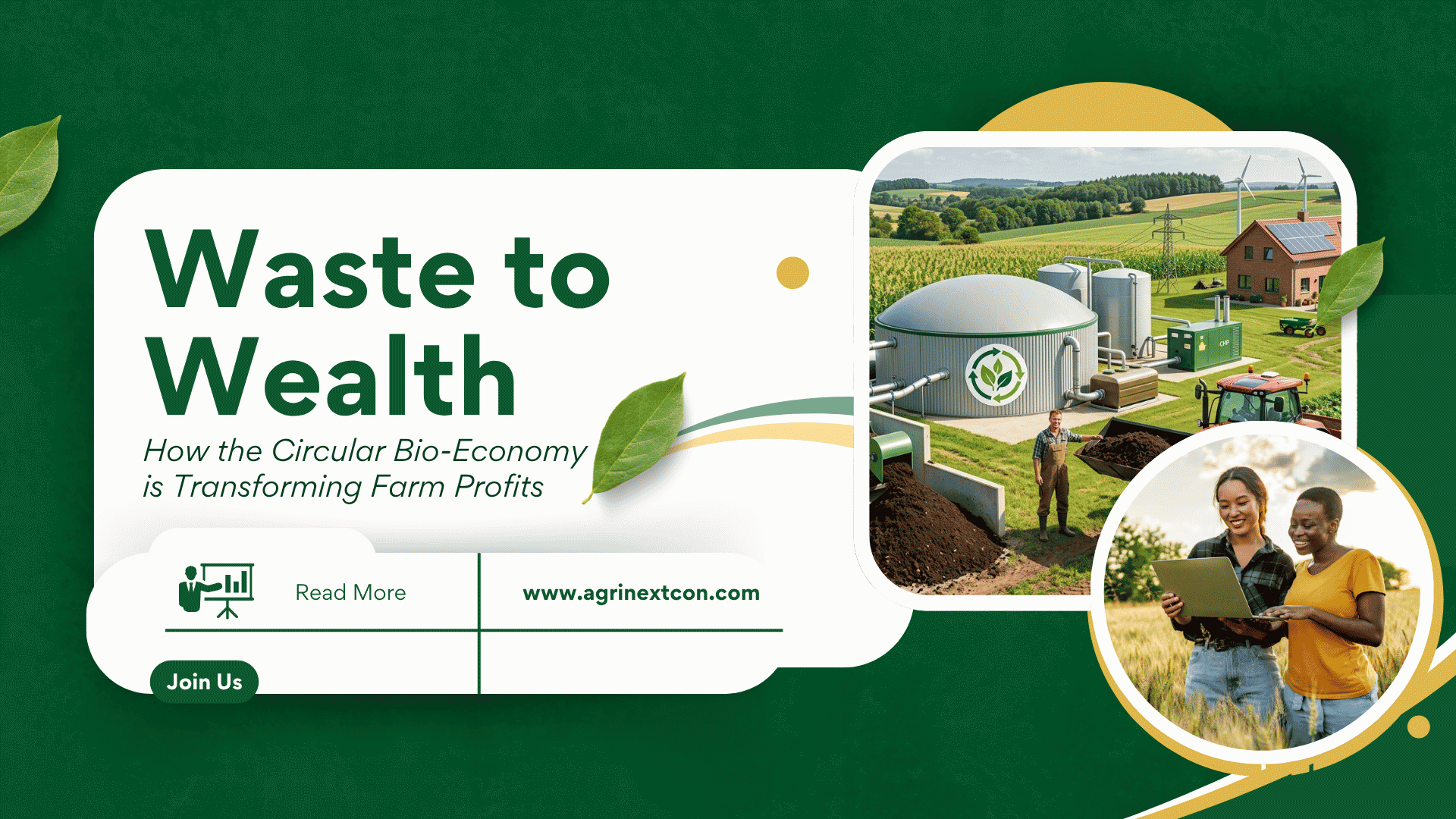
For decades, the end of a harvest marked the fate of crop residues: left to decay or burned in the open. Today, that narrative is rapidly changing. In the era of the Circular Bio-Economy, waste is no longer an afterthought—it’s a high-value resource.
Farmers are no longer just food producers. They are becoming energy suppliers, bio-material innovators, and key players in climate solutions.
The Hidden Cost of Waste
Every year, billions of tons of agricultural residues—straw, husks, and stalks—are generated globally. In regions like North India, seasonal stubble burning contributes heavily to hazardous air quality and carbon emissions.
But beyond the environmental damage lies a deeper issue: lost economic potential.
The Circular Shift: Closing the Loop
A circular bio-economy ensures that nothing goes to waste. Instead, residues are reintegrated into the system—creating a powerful triple win:
Environmental: Drastic reduction in CO2 and particulate matter.
Economic: New revenue streams for farmers from bio-energy and feed sales.
Soil Health: Returning processed organic matter back to the earth.
What’s accelerating this shift is technology—AI-driven residue mapping, IoT-enabled biomass collection, and blockchain-based carbon tracking—turning circular farming into a scalable reality.
Real-World Innovations Driving Change
1. Rice Straw to Clean Energy (Punjab, India)
In Punjab, where stubble burning once defined post-harvest seasons, companies like Verbio India are converting rice straw into Compressed Biogas (CBG). This renewable fuel powers transport and industry, while the by-product—fermented organic manure—returns to farms, enriching soil fertility.
2. Pineapple Leaves to Sustainable Textiles (Philippines)
Agricultural waste is entering the fashion value chain. Pineapple leaves are transformed into Piñatex, a plant-based leather alternative. The remaining biomass is further utilized for bio-fertilizers or biogas, ensuring zero waste.
3. Corn Residue to Precision Feed (USA)
In the U.S. Midwest, corn stover is processed using enzymes into high-density, digestible animal feed. This provides a cost-effective alternative during droughts while maximizing residue value.
AgriNext Awards & Conference 2025 Highlights
The 2025 edition occurred November 5-6 at Le Méridien Dubai Hotel & Conference Centre, focusing on resource resilience. Speakers like Anita Nouri discussed waste-to-circular innovations, while awards honored climate-smart startups with live demos of biogas and packaging solutions.
AgriNext Awards & Conference 2026 Outlook
Shifting to execution, the September 17-18 event at Crowne Plaza Dubai – Deira emphasizes partnerships with Farmer Producer Organizations (FPOs) for tech adoption. Expect Waste-to-Wealth elements in tracks on AI residue management, decentralized bio-energy, and carbon credits, building on circular agriculture sessions.
Why It Matters Now
Amid rising costs, climate volatility, and resource pressures, circular models maximize value from existing crops, integrating AI and biotech for sustainable profits. For AgriNext Awards & Conference 2026 attendees, these deployable solutions highlight farming’s next revolution.
Signup For AgriNext Conference Newsletter


 Reach us on WhatsApp