
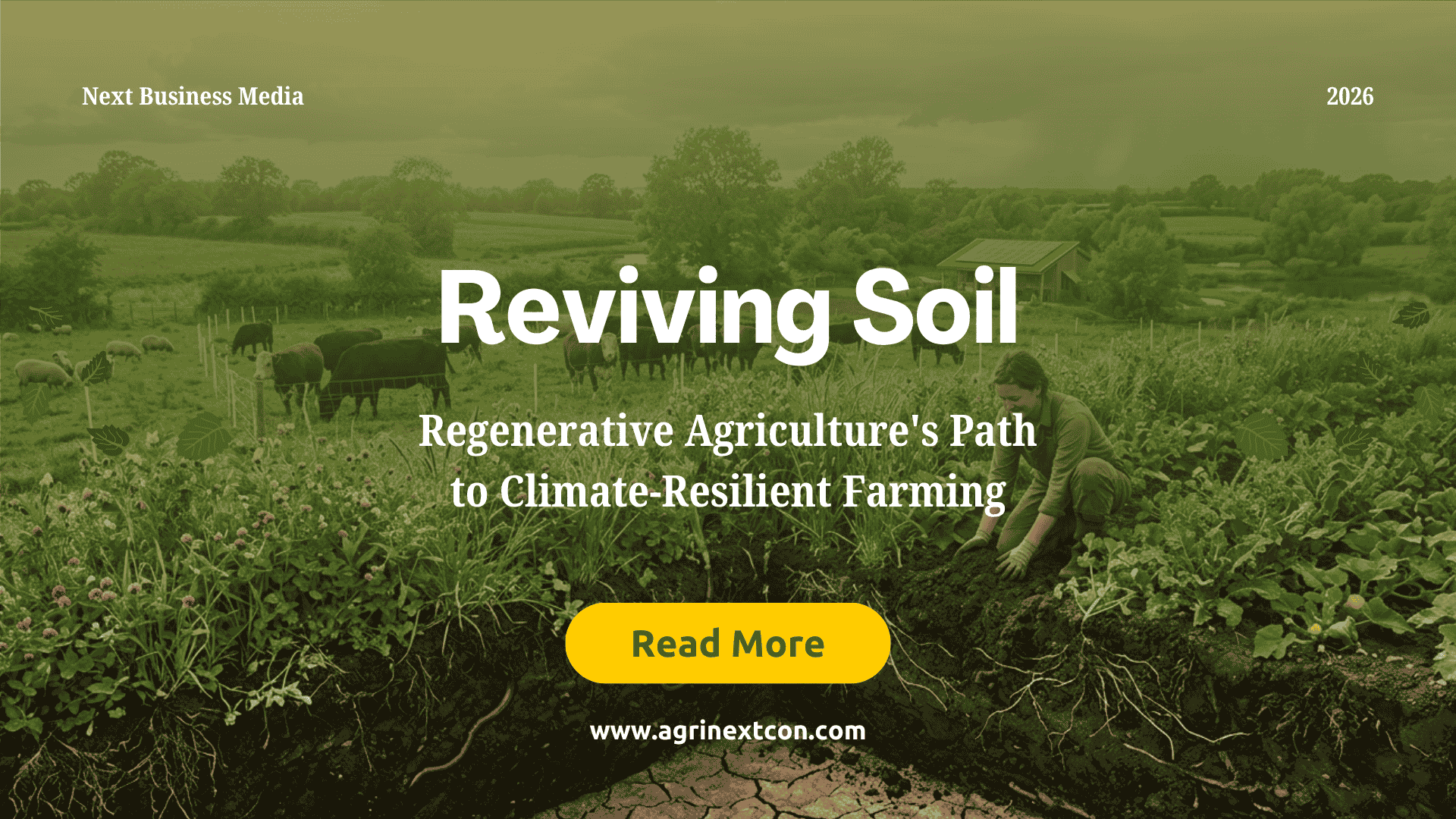
Regenerative agriculture is emerging as a powerful response to climate change—restoring degraded soils while building resilient farming systems. Aligned with the sustainability vision of AgriNext Awards and Conference 2026, it shifts the focus from extraction to regeneration.
Unlike conventional agriculture, regenerative systems prioritize living roots, minimal soil disturbance, and biodiversity—turning farms into self-sustaining ecosystems.
What Drives Regenerative Agriculture?
At its core, regenerative agriculture is not a fixed method but a flexible approach. Each farm adapts practices based on its soil, climate, and ecosystem—while following shared principles: improving soil health, enhancing biodiversity, and reducing external inputs.
Core Practices
Minimal Soil Disturbance
No-till farming preserves soil structure and microbial networks by avoiding plowing, retaining moisture, and preventing erosion while fostering natural nutrient cycling .
Crop Diversity & Rotation
Diverse cropping systems—through rotation, interseeding, and relay planting—naturally suppress pests, improve yields, and enhance resilience.
Agroforestry & Biodiversity Integration
Trees, hedgerows, and biodiversity strips create better microclimates, support pollinators, and stabilize ecosystems.
Precision & Reduced Inputs
Data-driven tools like sensors and GPS-guided systems optimize input use, reducing chemical overuse while maintaining productivity.
Biological Inputs
Microbial inoculants and biopesticides strengthen soil biology without leaving harmful residues.
Livestock Integration
Managed grazing mimics natural ecosystems—recycling nutrients, improving soil structure, and increasing carbon storage.
Goals
• Produce nutritious food sustainably
• Sequester carbon and reduce emissions
• Restore biodiversity and ecosystems
•Prevent deforestation through higher productivity
• Improve farmer livelihoods
Proven Benefits
Healthier soils can significantly improve water retention, helping farms withstand droughts. Many field studies show increased yields alongside reduced input costs. At the same time, biodiversity improves through better habitats and reduced chemical exposure.
Climate Impact: Opportunity with Caution
Agriculture contributes a significant share of global greenhouse gas emissions, while soils—despite losing an estimated 133 Pg of carbon over time—still store more carbon than the atmosphere and vegetation combined. According to the Intergovernmental Panel on Climate Change report (AR6, Chapter 7), soils have lost around 133 Pg of carbon.
Regenerative practices such as cover cropping and no-till farming show promising potential to increase soil carbon sequestration. Some estimates suggest they could capture meaningful amounts of CO₂ annually, though the exact scale varies widely depending on climate, soil type, and adoption rates.
At scale, these practices can help transform farms into carbon sinks—improving soil health, enhancing resilience, and contributing to long-term climate mitigation.
AgriNext Awards and Conference 2026 Spotlight
At AgriNext Awards & Conference regenerative agriculture is expected to take center stage as part of the broader shift toward climate-smart farming. From AI-powered soil monitoring to precision regenerative systems, the event will showcase how technology and ecology can work together.
Regenerative agriculture is not just a trend—it’s a transition. By rebuilding soil health and working with nature, it offers a practical path toward resilient, productive, and climate-ready farming systems.
Reference
Intergovernmental Panel on Climate Change (2022). Climate Change 2022: Mitigation of Climate Change (AR6 Working Group III, Chapter7).
Signup For AgriNext Conference Newsletter


 Reach us on WhatsApp